

The Feldenkrais Method®: A Way of Learning to Move
The Feldenkrais Method® is a form of somatic education developed by Dr. Moshe Feldenkrais between the 1940s and 1970s. It uses slow, gentle movement and directed attention to help you notice your habitual patterns and discover easier, more efficient ways to move. The method is taught in two formats: group Awareness Through Movement® lessons, guided by voice, and one-to-one Functional Integration® sessions, guided by gentle touch.
The Feldenkrais Method is used by professional athletes, actors, musicians, and dancers, as well as by people living with chronic pain or recovering from injury. Students commonly find it reduces pain and stress, builds strength, helps regulate the nervous system, and awakens new, more functional patterns for moving and living with ease.
Moshe Feldenkrais said, “We move according to our perceived self-image.” By expanding your perception and increasing awareness, you will become more aware of your habits and your tensions, and develop new, more functional ways of moving. By increasing sensitivity, the Feldenkrais Method assists you to live your life more fully, efficiently, and comfortably.
Who Was Moshe Feldenkrais?
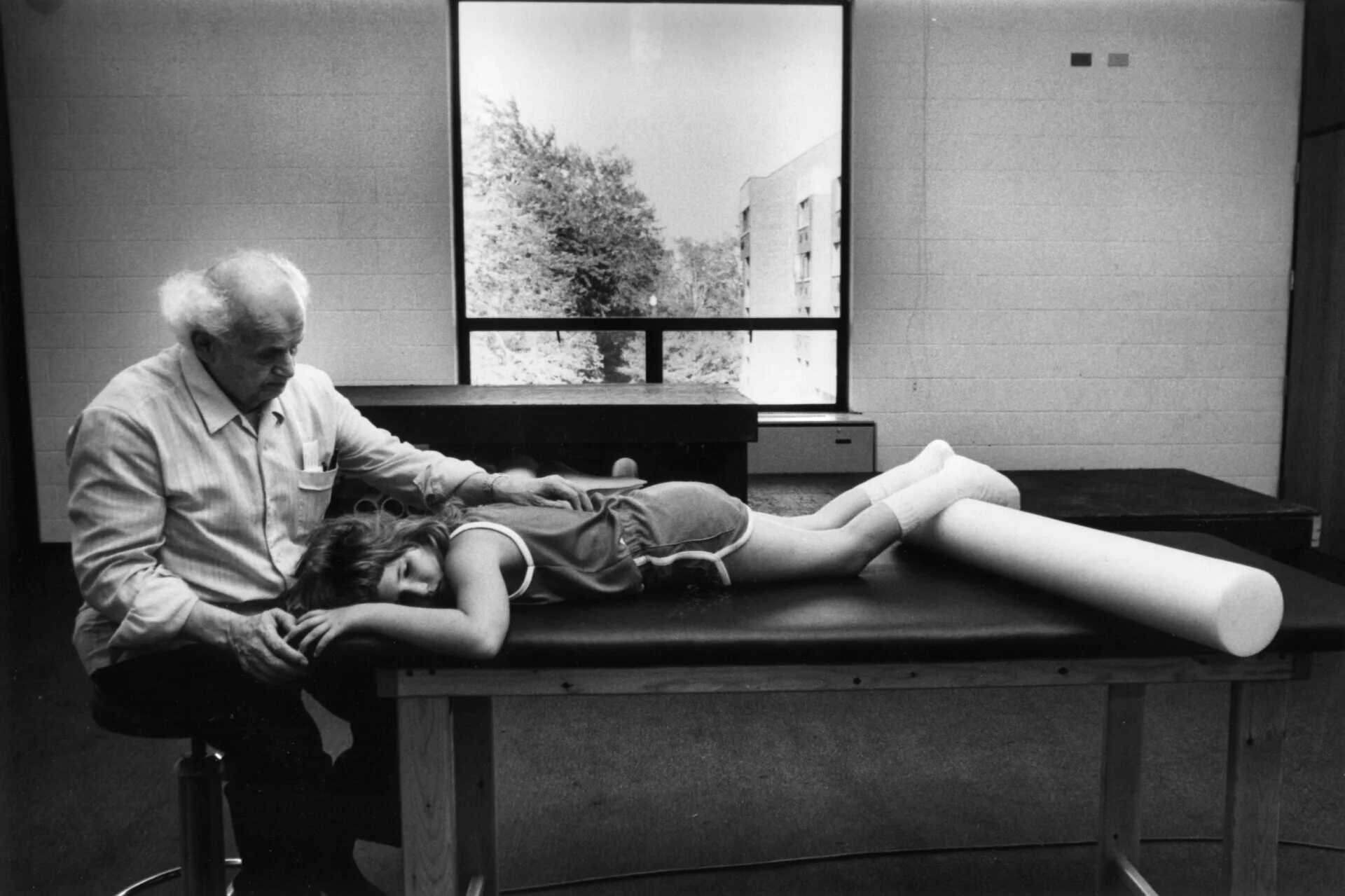
Dr. Moshe Feldenkrais was a physicist, engineer, and one of the first Europeans to earn a black belt in judo.
When a serious knee injury left him facing surgery with uncertain results, he began studying how people actually learn to move.
Over three decades he explored the connections between the body, the mind, the environment, self-awareness, and self-development, and the Feldenkrais Method grew out of that work.
How the Feldenkrais Method Works
The Feldenkrais Method is based on principles of physics, biomechanics, and an understanding of how humans learn and develop. Rather than stretching or strengthening, a Feldenkrais lesson asks you to pay close attention to how you move. Small, comfortable movements, done slowly, give your nervous system the information it needs to recognize unnecessary effort and find a better option on its own.
This is why Feldenkrais lessons are called lessons rather than exercises. An exercise asks you to repeat something until it gets stronger. A lesson asks you to sense what you are already doing, and to discover that there is more than one way to do it.
Deep rooted learning, pain relief, play and imagination, creative potential, new possibilities, spontaneity…
“I am going to be your last teacher. Not because I’ll be the greatest teacher you may ever encounter, but because from me you will learn how to learn. When you learn how to learn, you will realize that there are no teachers, that there are only people learning and people learning how to facilitate learning.”
Benefits of the Feldenkrais Method
Move with more ease and less effort
Feldenkrais helps you notice the extra effort you don't need, so everyday movement feels lighter and more coordinated.
Go deeper: Finding Ease: Feldenkrais Foundations · Making It Relevant · Artistry of Fluid Strength
Reduce pain, stress, and tension
By changing how you organize your movement, many students find long-held tension in the neck, shoulders, and back begins to let go.
Go deeper: Freeing the Neck and Shoulders · Your Creative Coordinated Spine
Settle and support your nervous system
Slow, attentive movement helps you recognize what a settled nervous system feels like, and gives you a place to return to when life gets stressful.
Go deeper: Unraveling Body Anxiety · Soften the System · From Rest to Action
Improve your posture without forcing it
Feldenkrais approaches posture as something you find through support and awareness, not something you hold.
Go deeper: Feldenkrais for posture · Posture Matters course · Organizing the Head and Neck
Walk with more ease and better balance
Lessons on the feet, spine, and pelvis help walking feel both grounded and buoyant.
Go deeper: Feldenkrais for Walking · Step into Ease
Build a healthier relationship with your pelvic floor and core
A whole-body approach to pelvic floor and deep core health, rather than isolated squeezing.
Go deeper: Feldenkrais for the pelvic floor · Pelvic Floor and Deep Core Rapport
Sharpen your senses, awareness, and focus
Increase proprioception, the ability to feel your integrated self, and strengthen your capacity for sustained attention.
Go deeper: Coming to Your Senses · Self Touch to Understand · The Focused Body
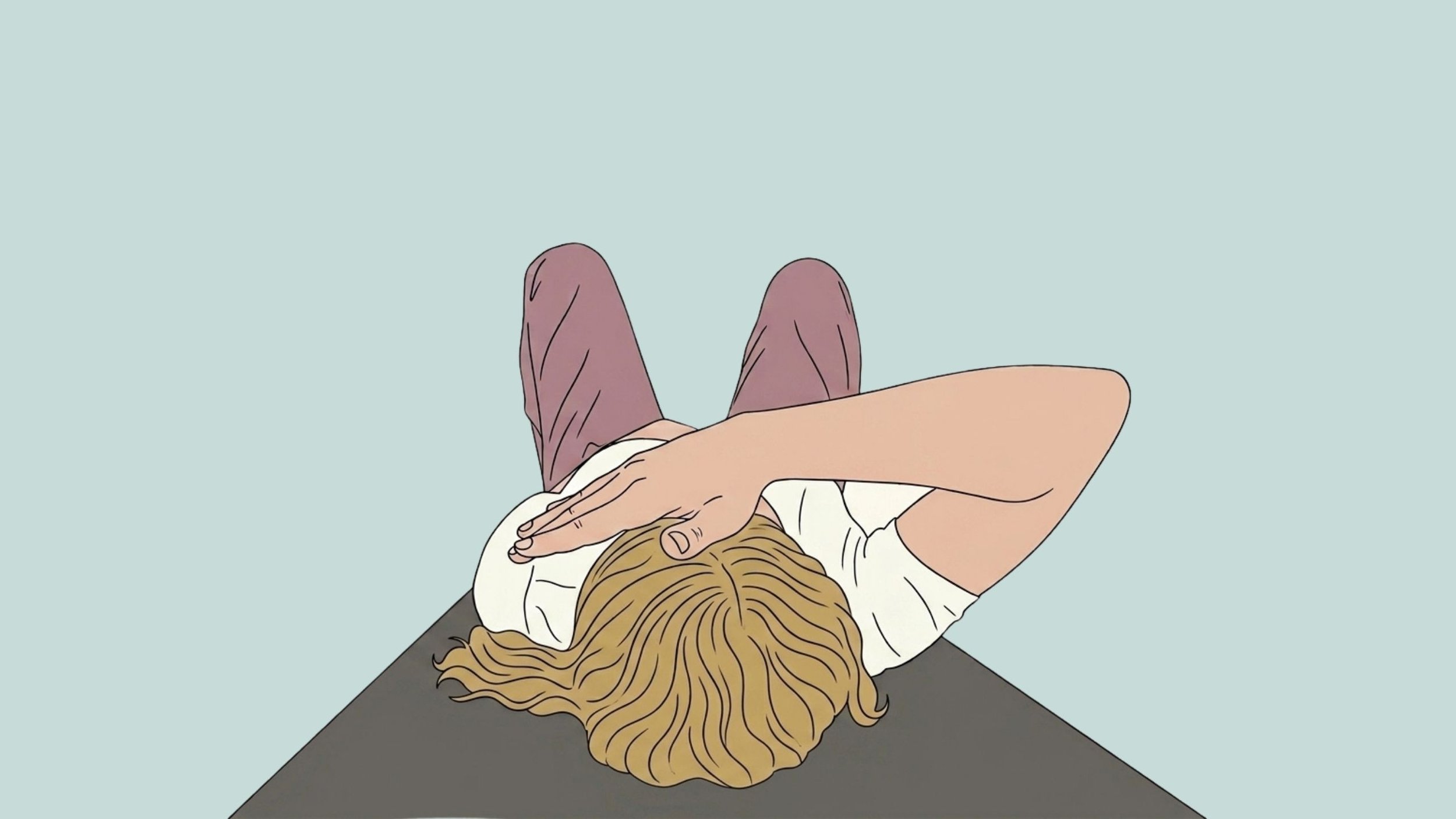
Feldenkrais Classes Online
Self-paced Awareness Through Movement® courses you can take from home, covering posture, walking, the pelvic floor, the spine, and the nervous system.
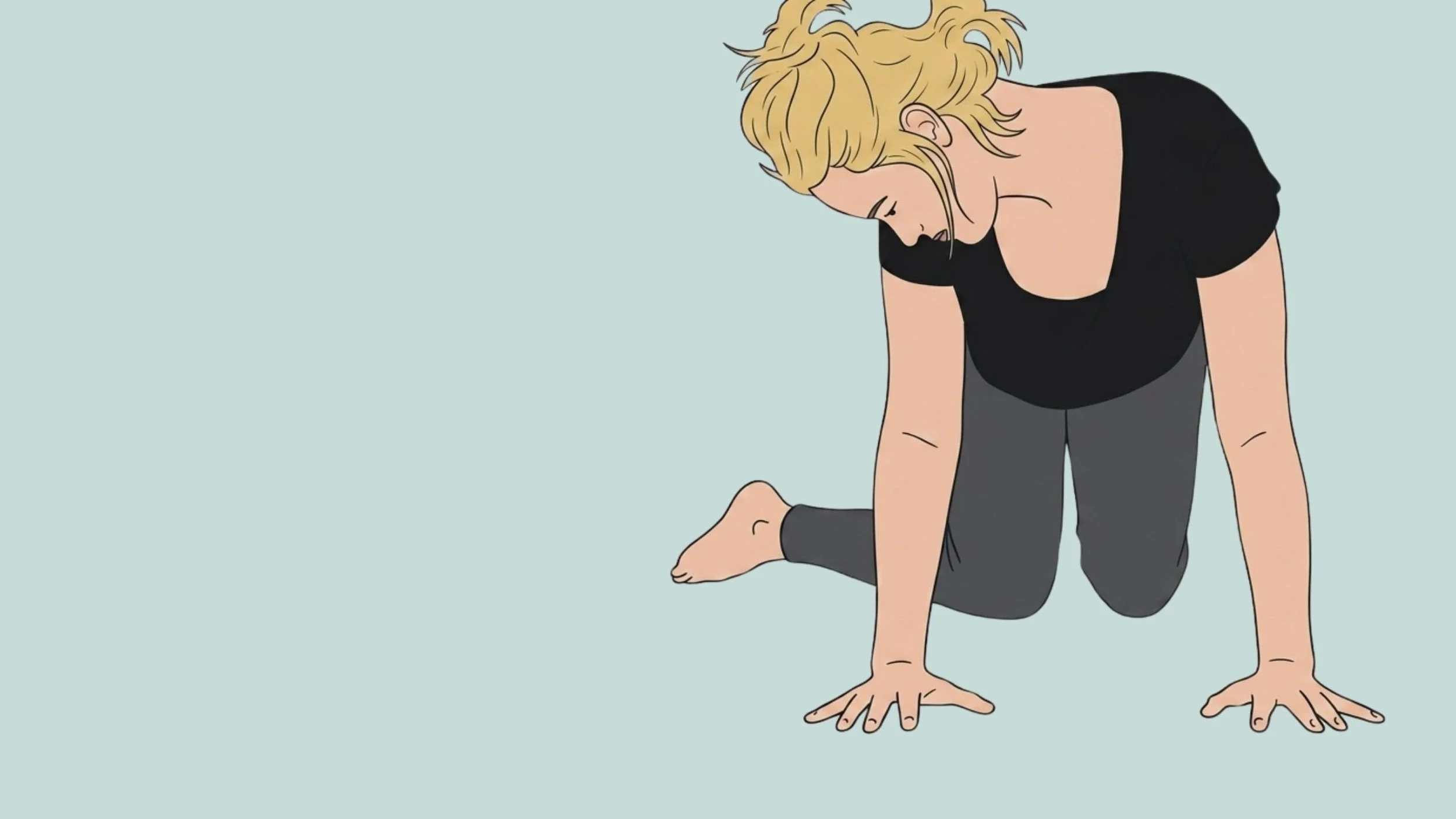
Feldenkrais + Yoga Classes Online
Blended courses that pair yoga asana with Feldenkrais® Awareness Through Movement, for a slower, more attentive way to practise yoga. No experience needed.
Group Class Format: Awareness Through Movement® (ATM lessons):
Awareness Through Movement® (ATM) lessons are a form of somatic education that combines gentle movement with directed attention to enhance movement function and develop an ability to listen to the body. Increase your efficiency while moving, improve your flexibility and coordination, and rediscover your natural capacity for graceful, ease-filled movement through these verbally guided classes. The Feldenkrais® Method is established from principles of physics, biomechanics, and an understanding of learning and human development.
“The practice is often hard to put into words, but it is involves cultivating my awareness, questioning my relationship to productivity and ambition, and relearning how to move outside my patterns. Sarah challenges me to notice and not achieve, to rest and not perfect, to be curious instead of judgmental. I leave class feeling somehow more in my body and more of the world.” - Jeffrey Wells
By expanding self-awareness through movement sequences, students uncover new and more functional options for how to move. Become more aware of your habitual neuromuscular patterns, and progress into new ways of relating to the world and experience new forms of movement. For most, a difference can be felt after one just ATM lesson. Repeated regular practice deepens your sensitivity and potential to integrate the profound shifts from the lessons into your everyday movement and life.
“Through Awareness Through Movement, we can learn to move with astonishing lightness and freedom - at almost any age - and thereby improve our living circumstances, not only physically … but emotionally, intellectually, and spiritually.”
Individual Session Format: Functional Integration® (FI):
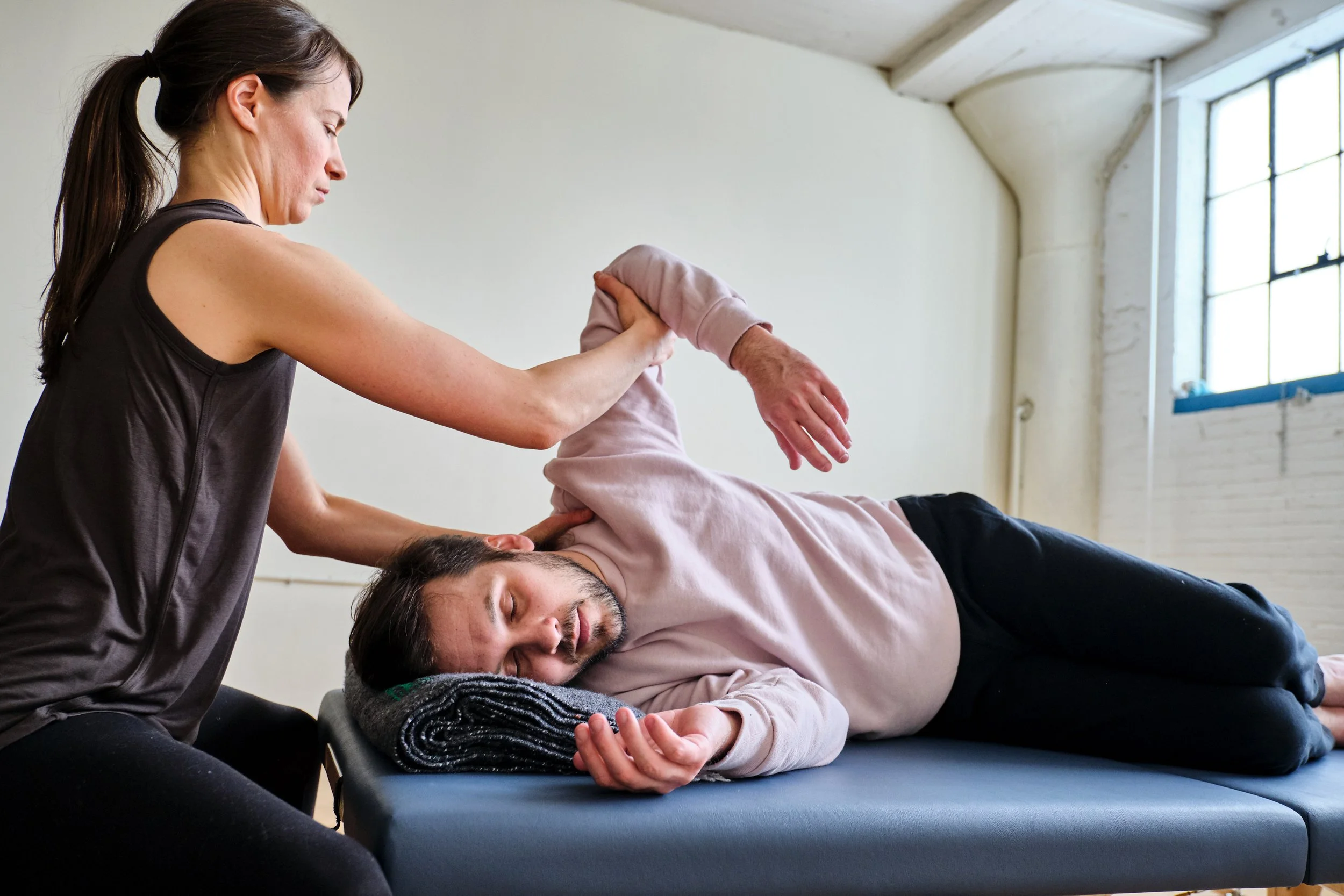
Feldenkrais® private sessions are known as Functional Integration® (FI®) lessons. In Functional Integration, the teacher guides an individual student in movement lessons using gentle, non-invasive touch as the primary means of communication.
The Feldenkrais teacher’s touch reflects to the student how they currently organize their body and actions. They suggest, through gentle touch and movement, expanded possibilities for new movement patterns which are more comfortable, efficient, and useful. Functional Integration lessons are flexible in their approach, determined by the student’s needs.
The student may lie comfortably on a table designed specifically for the work, or do some of the lesson sitting or standing. The student learns how to reorganize their actions in new and more effective ways through the experience of comfort, enjoyment, and ease of movement. Your practice is personalized to fit your needs in an open, safe space. The intention is never to “fix” or “correct" the student, but instead to create a context for learning. I will move you slowly, in an easy range, feeling how movement passes through you and helping take over extra work you are doing.
You will feel how you are connected, through movement, with a greater sense of ease in how your skeleton supports you. You may become aware of where or how you are holding tension and then find yourself letting go. You will have a fresh, newly discovered experience of yourself.
This recent comment from a student with shoulder pain the day after their first FI session:
“If I am dreaming, please don’t wake me. I haven’t gotten this far into the day without pain, for a month, probably. Nothing short of a miracle.”
Here is an example of part of a Functional Integration lesson:
More Ways to Practice with Sarah
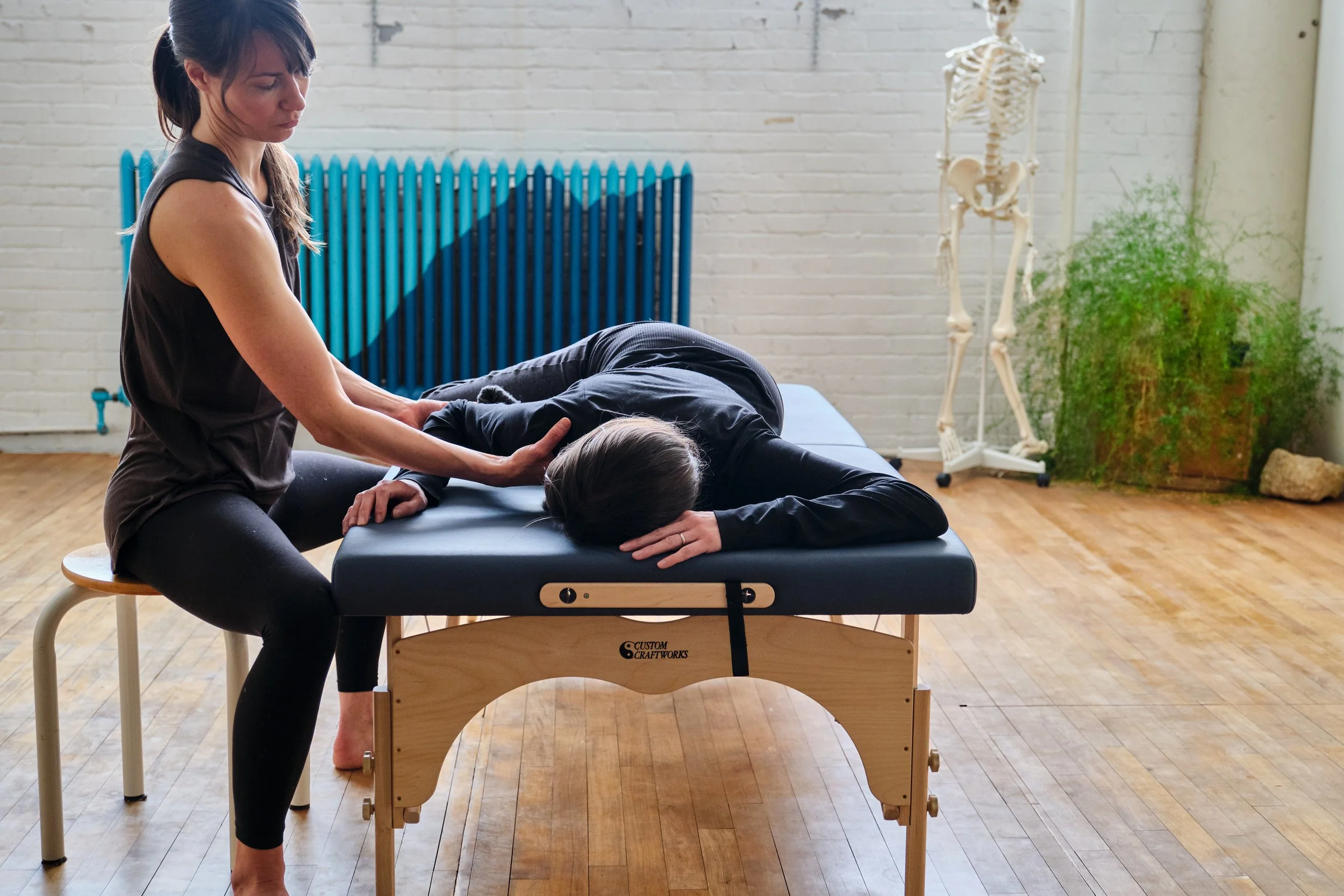
1:1 Feldenkrais with Sarah
Hands-on Functional Integration® sessions shaped around your needs, in person in Minneapolis. Not sure if it's right for you? Book a free consult first.
The Body Matter Class Library
Ongoing access to a growing library of Feldenkrais, Yoga, and Yoga Nidra classes to move through at your own pace, for one monthly membership. This includes all current series and all livestream classes.
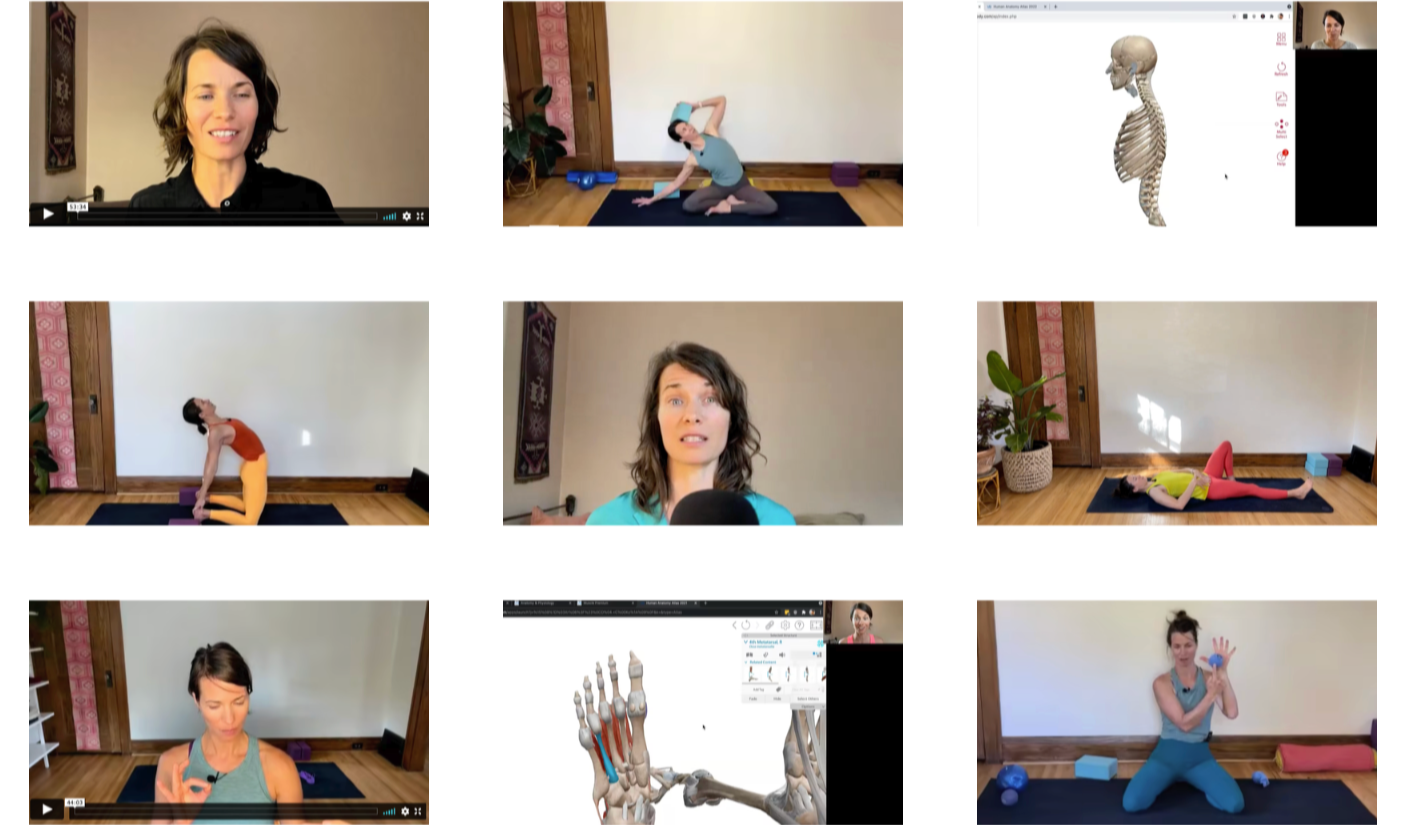
Live Weekly Classes on Zoom
Join Sarah in real time for weekly Awareness Through Movement® and yoga classes on Zoom, including the current livestream Feldenkrais series.

Get In Touch
Not sure which course or format is right for you? Sarah is happy to help you find the best place to start, whether that's a self-paced course, a livestream class, or in person classes and 1:1 Functional Integration® sessions in Minneapolis.
Feldenkrais Method FAQs
-
The Feldenkrais Method is a form of somatic education developed by Dr. Moshe Feldenkrais. It uses gentle movement and directed attention to help people notice habitual patterns and learn easier, more efficient ways to move. It is taught through group Awareness Through Movement lessons and one-to-one Functional Integration sessions.
-
No. Exercise and physical therapy typically focus on strengthening or stretching specific muscles. The Feldenkrais Method is a learning process: it works through the nervous system to change how you organize movement as a whole. Many people use it alongside other care.
-
Anyone who wants to move with more ease, from people living with pain or stiffness to athletes, dancers, and musicians looking to refine their movement. No fitness level or experience is needed.
-
There is a growing body of research on the Feldenkrais Method, including studies on balance in older adults and on chronic pain. Most studies are small, and more research is needed, but results so far are encouraging.
-
Yes. Awareness Through Movement lessons are guided by voice, so they translate well to online and recorded classes. You need only enough floor space to lie down and something soft underneath you.
-
Yoga works with defined poses and breath. Feldenkrais has no shapes to achieve; it focuses on sensing how you move and discovering new options. The two complement each other well, which is why Sarah also teaches Yoga and Feldenkrais blended courses.