
What Is a Hypertonic Pelvic Floor? Why Tight Isn't Strong
Pelvic floor health is one of the most requested topics I get from students. And almost every conversation starts in the same place: someone has been told their pelvic floor is weak, they have been doing their Kegels faithfully, and nothing has changed. Sometimes things have even gotten worse.
For many of these students, the pelvic floor was never weak to begin with. It was working too hard. It was holding on.
This is what is often called a hypertonic pelvic floor. In this post I want to explain what that means, how it can show up in daily life, and why the answer is usually not more squeezing. It is learning how to let go.

What is a hypertonic pelvic floor?
A hypertonic pelvic floor is a pelvic floor that holds more tension than it needs to, and has a hard time releasing it. You may also hear it called an overactive or tight pelvic floor.
The pelvic floor is a group of muscles that spans the base of the pelvis, like a hammock slung between the pubic bone, the tailbone and the two sitting bones. It supports the organs above it, helps with bladder and bowel control, and responds to every breath you take.
A healthy pelvic floor is responsive. It engages when you cough, lift or jump, and it lets go when you rest, breathe in, or go to the bathroom. A hypertonic pelvic floor loses some of that range. It stays partly switched on, even when nothing is asking it to work.
This can happen for many reasons. Long hours of sitting, ongoing stress, holding the belly in, old injuries, or years of being told to squeeze can all teach the pelvic floor that bracing is its normal state. Over time, the habit stops feeling like effort. It just feels like you.
Common signs of a hypertonic pelvic floor
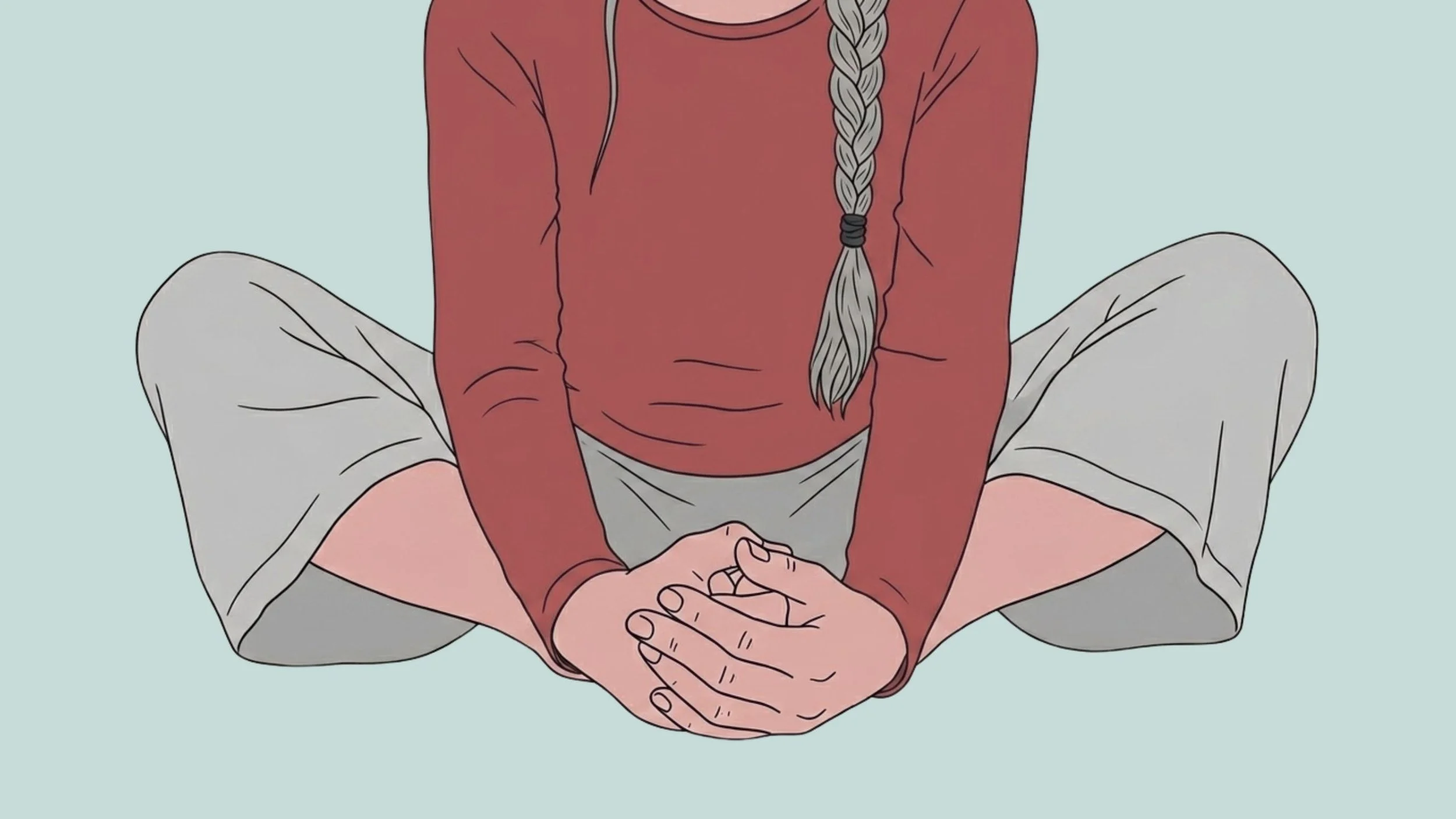
Hypertonic pelvic floor symptoms can be confusing, because many of them look a lot like weakness. People commonly describe:
Needing to urinate often or urgently, or feeling like the bladder never fully empties
Difficulty starting the flow of urine
Constipation or straining with bowel movements
Pain or discomfort with sex or with inserting a tampon
Aching in the low back, hips, tailbone or buttocks
A sense of gripping or holding in the pelvis and belly that is hard to switch off
Shallow breathing that stays high in the chest
You might recognize one of these or several. None of them on their own tells you what is going on. If you are experiencing any of these, especially pain, I always encourage you to see a pelvic health physical therapist or your doctor. They can assess what your pelvic floor is actually doing, which is something no article can do for you.
Why tight isn't strong
It can seem paradoxical to relax a muscle in order for it to become stronger. But a muscle that is always contracted has less capacity to contract any further, and less ability to move through its full range.
A habitually contracted muscle is a weak muscle.
Think of making a fist and holding it all day. By evening your hand would not be stronger. It would be tired, achy and slow to respond, and if you suddenly needed to grip something, you would have very little left to give.
The pelvic floor works the same way. Strength is not how hard a muscle can hold. It is how well it can respond: engaging when you need it, and releasing when you don't. A pelvic floor that can fully let go is a pelvic floor that can also fully engage.
Why Kegels may not help
Kegels ask you to isolate the pelvic floor and squeeze. For a pelvic floor that is genuinely underactive, that can be useful. For a pelvic floor that is already holding on, it can mean practicing the very habit that is causing the trouble.
There is a second problem with isolation. The pelvic floor does not work on its own. It works in rapport with the deep abdominal muscles, the hips, the buttocks and the diaphragm. When you breathe in, the diaphragm descends and the pelvic floor softens and widens to make room. When you breathe out, they both rise. If the breath is held or stays high in the chest, that natural rhythm is lost, and the pelvic floor can get stuck in a guarded position.
So squeezing one small group of muscles harder rarely addresses the bigger picture. The question is not how much more you can contract. It is: What would let this area feel safe enough to stop bracing?
A gentler approach: Feldenkrais and the pelvic floor
In my teaching, I take a whole-body approach to pelvic and abdominal health through the Feldenkrais® Method. We practice learning how to relax the pelvic floor and deep abdominal muscles, so that we can engage them when they are actually needed. This is not a practice of isolating the pelvic floor with exercises like Kegels.
Feldenkrais Awareness Through Movement® lessons are slow, gentle and usually done lying down. We reduce the force of each movement so that we can feel more. When you stop trying so hard, your nervous system gets clearer feedback about what you are doing, and it can begin to choose an easier way.
Rather than working on the pelvic floor directly, we often move the pelvis, the hip joints, the ribs and the breath, and let the pelvic floor come along for the ride. It is an indirect approach, and that is deliberate. A muscle that is already gripping does not usually respond to being told to grip more precisely. It responds to being given a reason to let go.
A short exploration to try
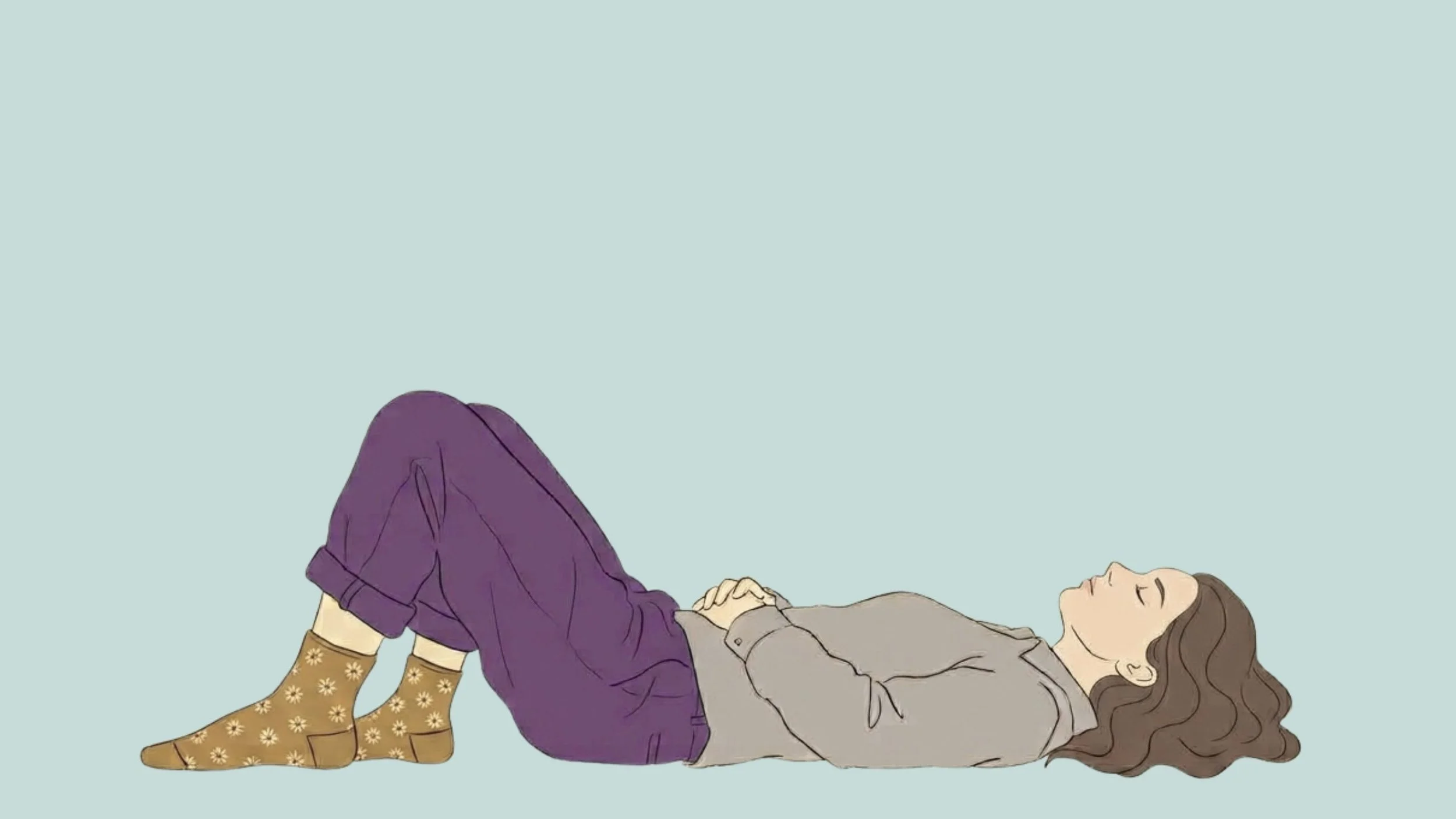
This takes about five minutes. Please be incredibly kind with yourself, and stop if anything feels uncomfortable.
Lie on your back with your knees bent and your feet standing on the floor. Rest for a moment and notice how your back meets the floor.
Bring your attention to your breath without changing it. Notice whether the belly moves, or whether the breath stays up in the chest.
Very slowly, roll your pelvis so your lower back presses gently toward the floor, then let it return. Keep the movement small, smaller than you think you need.
Now roll the pelvis the other way, so your lower back arches slightly away from the floor. Return to the middle.
Go back and forth between the two several times, with less and less effort. Can you let the breath keep moving while you do this?
Rest, and notice. Does your pelvis feel any different against the floor? Has the breath changed?
You didn't squeeze anything. And yet many people notice the pelvic area feels softer and more available after something this simple. That is the subtlety of this work.
Where to go next
If this approach resonates with you, there are a few ways to go deeper.
To understand the method more fully, read Feldenkrais and the pelvic floor, which covers the pelvic clock, whole-body tension release and the free lessons available.
If you would rather listen, Episode 88 of my podcast, a Feldenkrais Approach to Pelvic Floor and Abdominal Health, goes into these ideas in my own words. Episode 89, Rolling a Ball from Hip to Gip with Pelvic Floor Awareness, is a short guided lesson you can do today.
And if you are ready for a full practice, Pelvic Floor and Deep Core Rapport is a self-paced course of eight Awareness Through Movement lessons. It is designed to establish a harmonious relationship between your hips, buttocks, pelvic floor and deep core, so you can learn to relax and build strength at the same time.
Frequently Asked Questions
-
A hypertonic pelvic floor is one that holds more tension than it needs to and has difficulty relaxing. It is also called an overactive or tight pelvic floor.
-
No. A habitually contracted muscle is a weak muscle. Real strength is the ability to engage when needed and release fully when not.
-
Kegels train the pelvic floor to contract, which may reinforce tension that is already there. Speak with a pelvic health physical therapist about what is right for you.
-
Feldenkrais uses slow, gentle movement and attention to help the nervous system release habitual holding. It works through the pelvis, hips, ribs and breath rather than isolating the pelvic floor.
-
No. Feldenkrais is movement education, not medical treatment. It can sit alongside care from a pelvic health physical therapist or doctor.
-
No previous experience is needed. Lessons are done lying down at a level of effort you choose.