
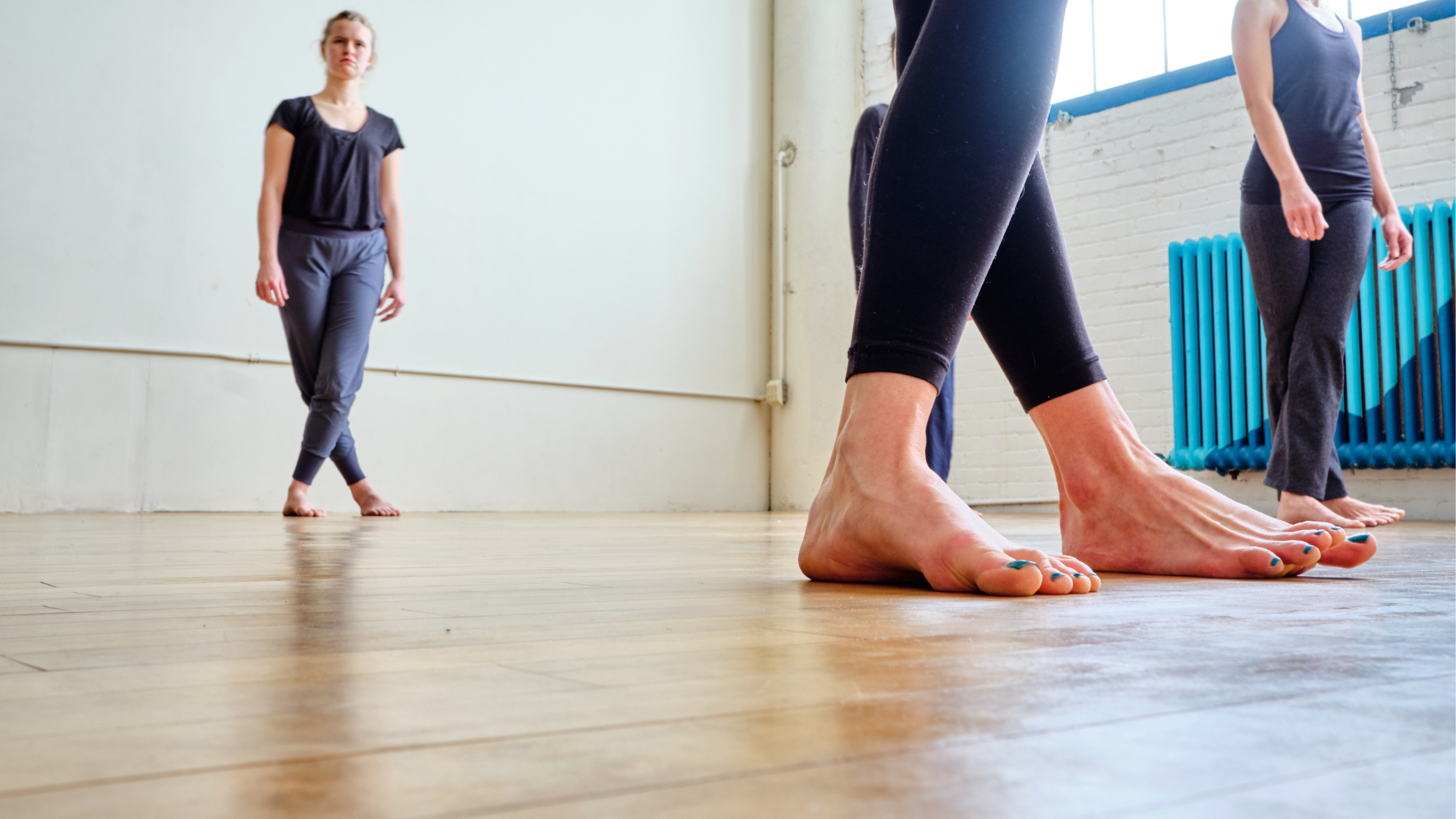
Feldenkrais and Walking
Gentle Exercises for Walking with Ease
Most advice on walking better starts with the legs: take longer strides, land on your heel, strengthen your glutes. But your legs are only part of the story. Your spine, ribs, pelvis, feet and even your eyes take part in every step you take.
The Feldenkrais Method takes a different route. Instead of drilling a better stride, it works through attention and gentle movement, using the whole of you rather than one isolated part. Walking is something most of us take for granted until it stops being easy. We think about where we are going, not how we are getting there. Change the relationships between your feet, pelvis, spine and head, and the way you walk changes with them.
This page is a starting point. It covers what the method is, why walking starts in the spine as much as the legs, and where to go next depending on what you are looking for.
What Feldenkrais walking exercises actually involve
The Feldenkrais Method is a form of movement education. You are not stretching or straining, and nobody is correcting your stride. You are learning walking awareness: noticing how you actually move, spotting the habits that restrict you, and finding an easier option.
Awareness of what you are doing is the first step to letting go of effort you do not need. Once you can feel the habit, you have a choice about it, and a more skillful, confident and easy stride becomes available.
Most lessons are done on the floor, lying on your back or side, with short explorations in sitting, standing and walking. Taking away the demands of balance and gravity lets you sense the patterns that walking is built on. You then bring what you have found back up to standing and into your everyday walking.
Many of these patterns go back to how we first learned to move. Rolling, reaching and crawling all teach the spine and limbs to work together, and revisiting them is often the quickest route to a freer walk.

If you have never done a Feldenkrais lesson before, walking is a good place to begin. These are Feldenkrais exercises for beginners as much as for experienced students. You do not need to be flexible, fit, or familiar with any of the terminology. Here is what to expect in a Feldenkrais Awareness Through Movement lesson.
Why walking starts in the spine, not just the legs

There is an assumption built into most walking advice that the legs do the work. They do some of it. But the spine plays a more central role than most people realize. The spine and torso help start each step and help control your gait as you go.
When you walk well, the pelvis and shoulders turn gently in opposite directions, the ribs and spine take part in every stride, and the head stays balanced while the eyes look ahead. When the torso is held stiff, the legs are left to do everything. Strides shorten, the hips tighten, and walking starts to feel like effort.
So the work is not about forcing a longer stride or a straighter back. It is about finding how the whole of you takes part in walking, so the legs can swing more freely and each step takes less effort. That is how you improve walking gait from the inside out.
If you have been working on your walking and it still feels stiff or effortful, this distinction is worth sitting with.
That usually means:
Sensing how the hips and shoulders move in relation to each other
Letting the spine and ribs take part in each step
Finding how the feet meet the ground and push away from it
Reducing effort until the movement is easy enough to be interesting
Taking what you learn on the floor into standing and walking
None of this asks you to push through discomfort. If something hurts, make the movement smaller or rest.
“After these lessons, I often feel like I am “floating”. I continue to realize, in real time and activities like walking, the connection between all parts of my body….the supple power that moves up and down my spine, from my head to my pelvis.”
Related Podcasts
If you would rather listen than read, these episodes cover the same ground in Sarah's own words.
Episode 107: Walking Around Your Center Line - Feldenkrais
This is an intro class for the Feldenkrais Walking Series: Walking From Your Spine. The context for this series is to learn about how our limbs and our spine move in relation to each other.
Episode 93: Rolling the Pelvis and Head with Leg Circles
In this episode discover new ways to coordinate and free your pelvis for smoother, more efficient movement. By improving pelvic alignment and mobility, you'll find support that makes everyday walking feel lighter and more effortless.
Go deeper with the full courses:

Walking From Your Spine: Feldenkrais Walking Series
Walking From Your Spine takes everything on this page and builds it into a complete course. Across eight lessons, each recorded in two variations, you will explore how the spine and torso start and guide each step, through lessons like Walking With Your Sternum, Crawling to Improve Walking, and Counterbalance Leg Swings in Walking. Short anatomy talks explain what you are working with, and you keep the recordings to return to whenever you need them.
“After this lesson I feel super mobile inside and like I could do anything, like the lines and the mobility can stay.”
Other Walking Focused Feldenkrais Courses:

The Walking Series: Addressing Your Feet:
This series will start from the ground up by addressing the form, function, suppleness, and responsiveness of your feet. These lessons will help you integrate and find coordination between the feet to the legs, all the way up through the pelvis, spine to head. All of these are critical components of balance, maintaining ease in an upright posture, and effortless in walking.

Step Into Ease: Intelligent Feet + Better Balance
This course will bring the unique principles of the Feldenkrais method to the health and function of your feet, ankles, knees, and hips, helping to improve your balance and stability. Learn how to integrate what you learn in the lessons into your daily life. Sustain better posture, walking, running, and balance with more comfort, pleasure and efficiency.
Yoga + Feldenkrais Blended Course:

Cultivating Strength, Balance and Stability: The Blending of Yoga & Feldenkrais
In many yoga traditions, the teaching emphasis is on perfecting shapes (poses) and isolating movement at specific joints. In this blended class, attention is focused on treating your body as a connected system, moving beyond isolated exercises.
The first part of class will focus on functional mobility and strength as we practice balance, stability, and the ability to feel upright in standing. The last half of class will bring us into a softer place, with mindful movements for releasing tension, and pain.
Understanding the Difference: Yoga, Feldenkrais, and Walking
Yoga and the Feldenkrais Method® both build a deeper connection to your body, but they come at movement differently. Yoga tends to work with shapes: poses you move into, align and hold, often with the teacher demonstrating.
A Feldenkrais® Awareness Through Movement class has no shapes to copy. The whole class is verbally guided, and the focus is on the coordination and quality of movement rather than holding a pose or reaching the edge of a stretch. That makes it well suited to something like walking, which is less about any single position and more about how everything works together.
Sarah's Yoga + Feldenkrais Blended Classes bring the two together. You work with familiar yoga poses, using Feldenkrais principles to find them with less effort, and carry that ease into how you stand and walk.
Why Choose the Blended Class?
If you like having a visual model to follow, or you want the familiarity of yoga without the pressure of perfect poses, the blended format gives you both.
See the difference for yourself:
How walking works and what moves you forward:
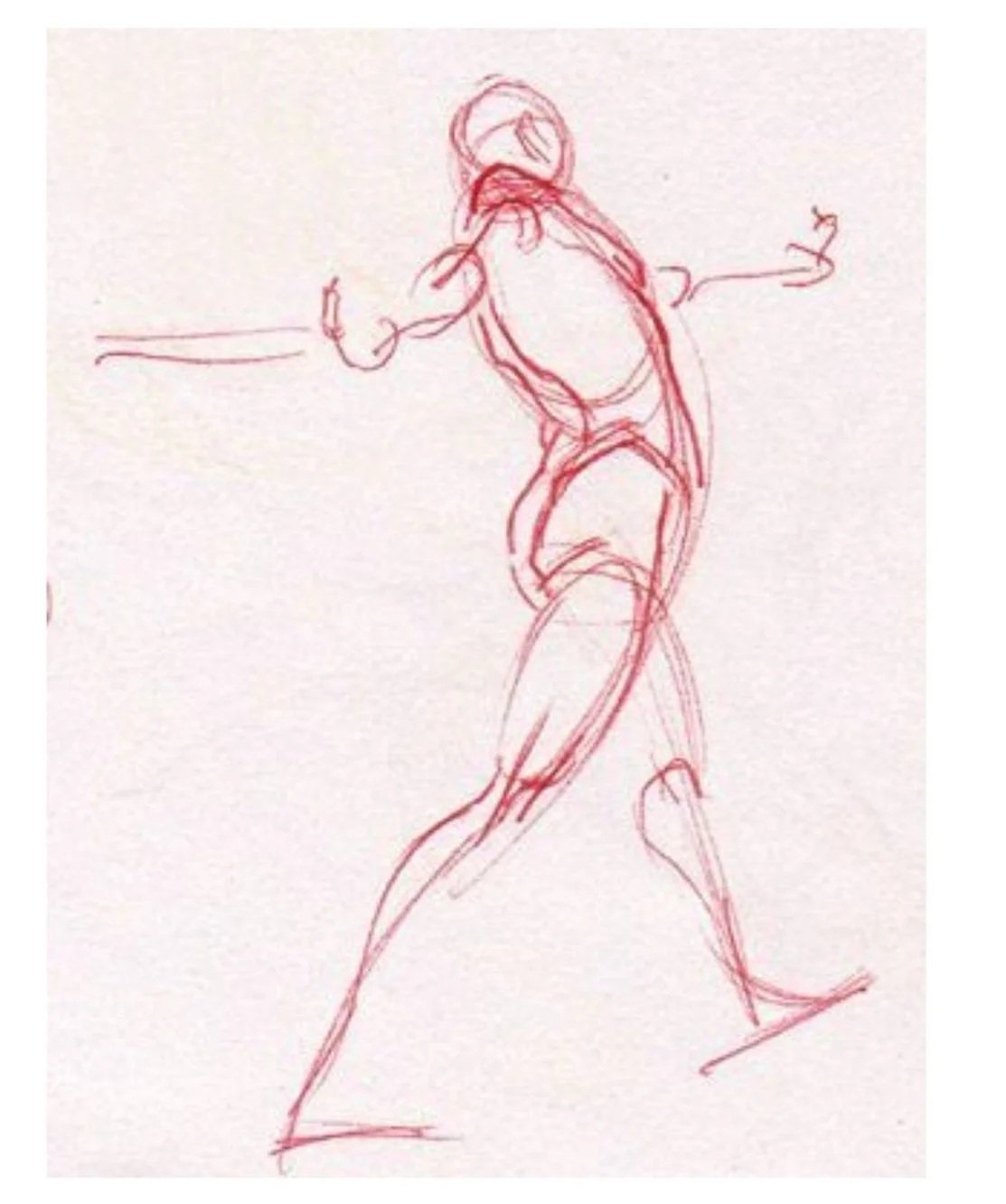
Walking on two feet is one of the things that makes us human. Our supple chests and torsos, working together with our legs, allowed our ancestors to cover long distances gracefully and efficiently. Walking was meant to be a pleasurable, whole body experience.
Each step is a shift of weight from one foot to the other. The pelvis rotates and tilts, the spine twists gently, the shoulders and arms counterbalance the hips, and the head stays balanced on top while the eyes lead the way. The feet adapt to the ground underneath them, spreading and springing rather than landing like blocks.
One lesson in the Walking Series asks a simple question: Where does the leg “begin”? Most people point to the hip. The answer, once you feel it through movement, involves a lot more of you. Walking is complex, but when it is done efficiently it can feel buoyant and grounded at the same time.
Balance, confidence, and the fear of falling
Balance depends on feeling where your body is in space. The more clearly you can sense that, the more easily you can detect a wobble, respond to it and recover.
Fear plays a bigger part than most people expect. When we are worried about falling, we tense up and hold our breath, which limits movement and makes a fall more likely, not less.
Gentle Feldenkrais lessons support easier breathing and a calmer nervous system, while refining the body awareness that balance relies on. The result is a walk that feels steadier because it is more responsive, not more rigid.
Habits, sitting, and what modern life does to walking

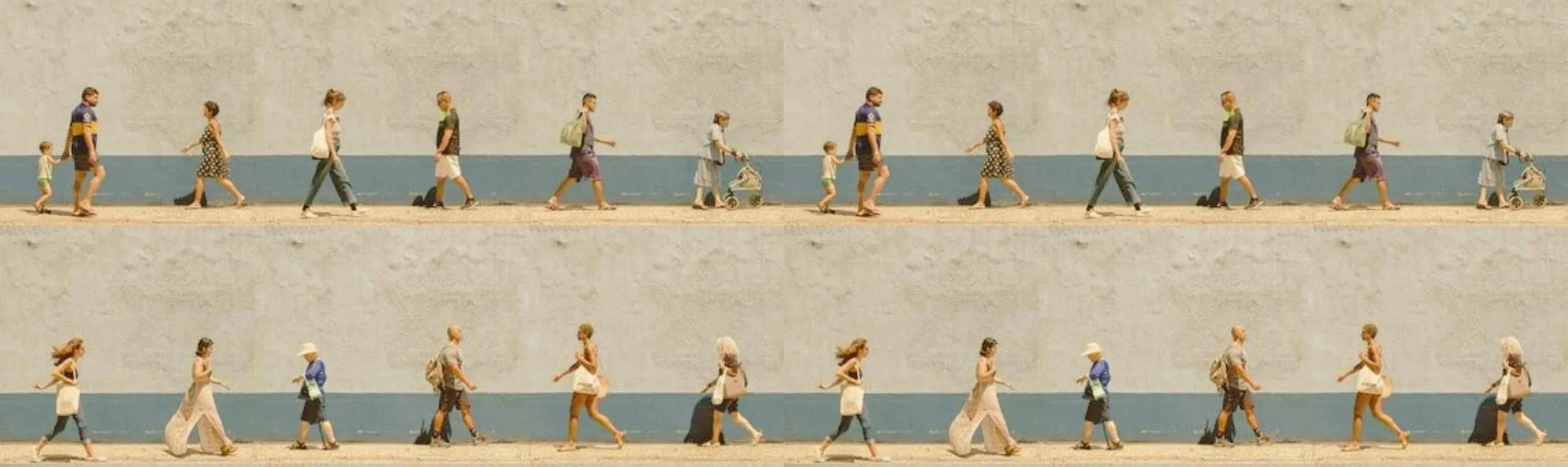
Everyone has habitual ways of walking. Some are easy to spot, like always stepping off on the same foot or favoring one leg. Others are much harder to detect, like holding the ribs still or looking down at the ground a few steps ahead.
Modern life makes these habits harder to shake. Long hours of sitting stiffen the hips and torso. Walking while looking at a phone pulls the head forward and down. Over time the torso stops taking part and the legs are left to carry the whole job, which is why walking can start to feel heavy long before anything is actually wrong.
Injury, surgery and pain change the picture too. After a hip or back operation, or while managing chronic pain, it is natural to guard and brace, and those protective patterns can outlast the reason for them. Gentle lessons can help you find easier options again, alongside any care you are receiving.
Gaining more freedom and confidence in your walking is key to an independent life. That is what makes this work worth the time.
Improving posture through the rest of you:
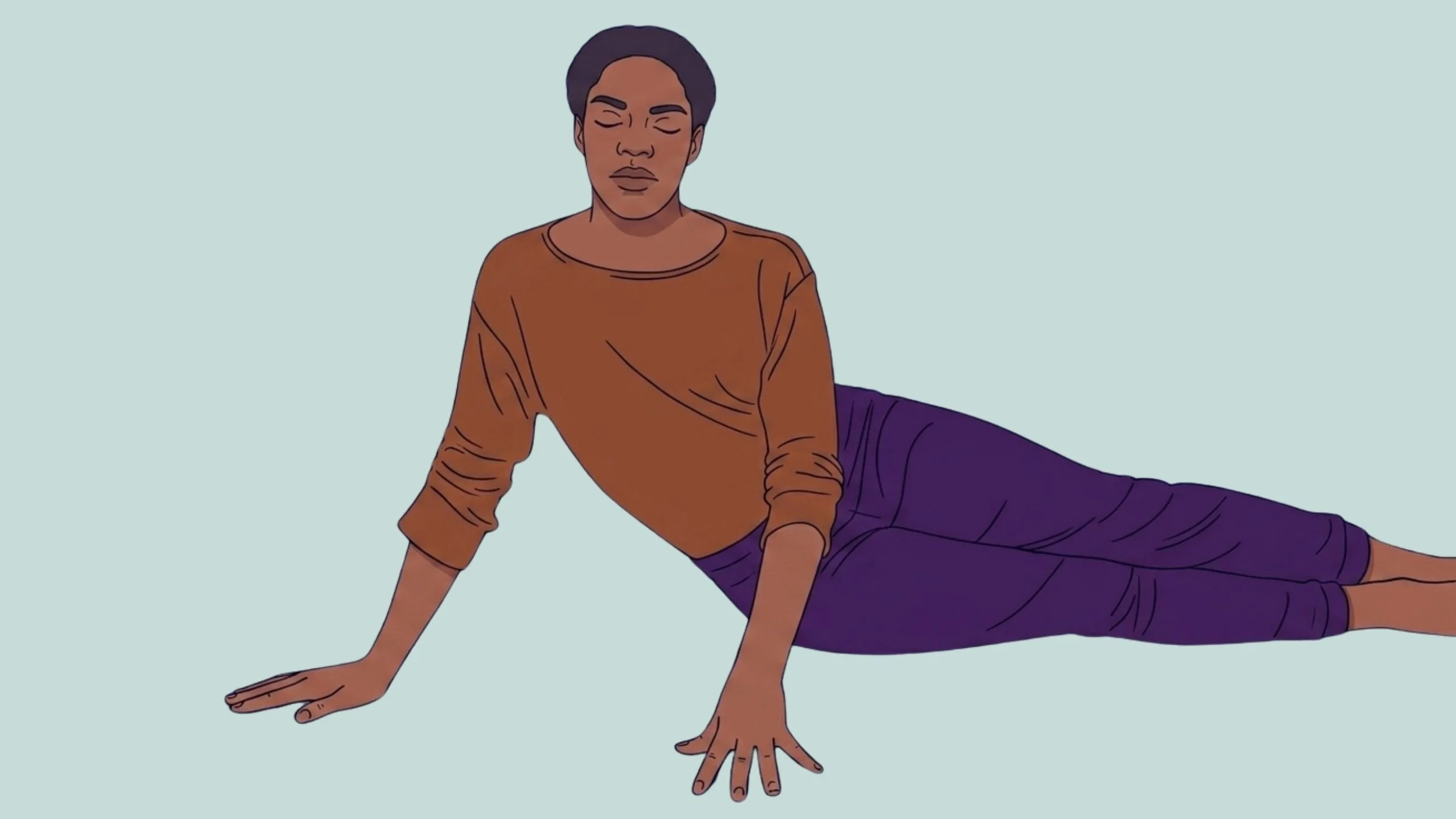
Better walking rarely comes from working on the legs alone.
Conventional gait training exercises tend to focus on the step itself: strength, stride length and repetition. They have their place, especially in rehabilitation. Feldenkrais looks at what walking depends on. If the pelvis cannot move freely, the spine compensates. If the ribs are held, the shoulders cannot counterbalance the hips. If the head is pushed forward, the whole body leans after it.
This is why a lot of the most effective work for walking does not look like walking at all. A lesson might focus on the pelvis, the sternum or the eyes, and finish with a stride that feels longer and lighter. Your posture shapes the way you walk, so the posture page is a natural next step, and the pelvis plays a central role, which connects directly to the pelvic floor.
Explore Our Audio Lessons
If you would like to try something before committing to a course, the audio lesson library has complete Awareness Through Movement lessons, not samples, so you get a real feel for what the longer courses are like.

This short Feldenkrais audio lesson uses the pubic bone, tailbone, and hip joint creases as key anatomical points of reference. You will learn to sense your hip joints as an integrated part of your pelvis while deepening awareness from your pelvic floor outward.
Perfect as a standalone practice or as a sample of what’s to come, this lesson offers a preview of the gentle, refined explorations featured in the full Pelvic Floor and Deep Core Rapport Series.
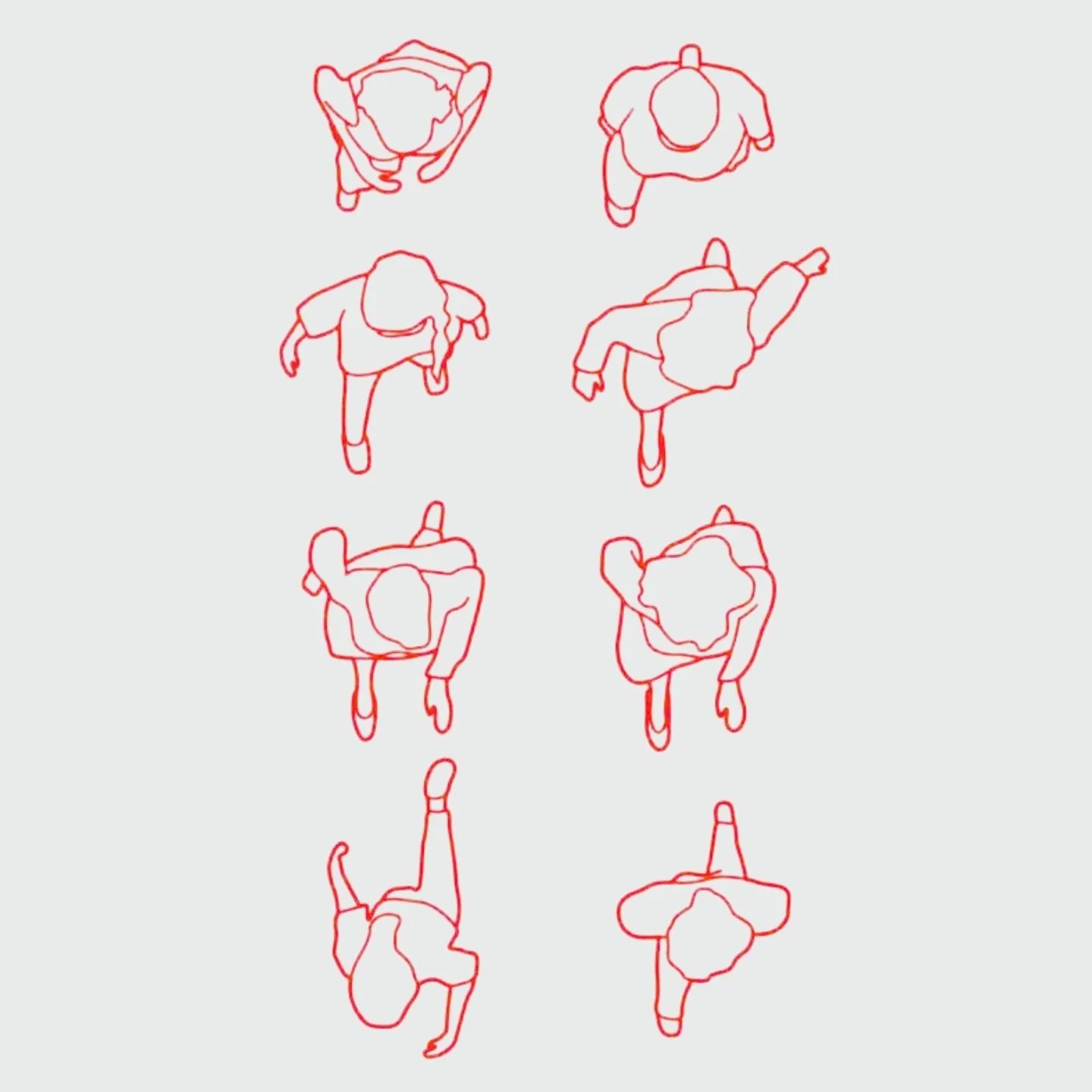
Where do your chest and head turn when you take a step? This Feldenkrais lesson will help you sense how you organize your chest, shoulders, head and pelvis for walking. This is the first lesson in the online course: Walking From Your Spine.
Class library membership
The Feldenkrais and Yoga Class Library gives you ongoing access to the whole collection instead of buying courses one at a time. New classes are added weekly, so you can move between walking, balance, posture, the pelvic floor and anything else as your needs change.
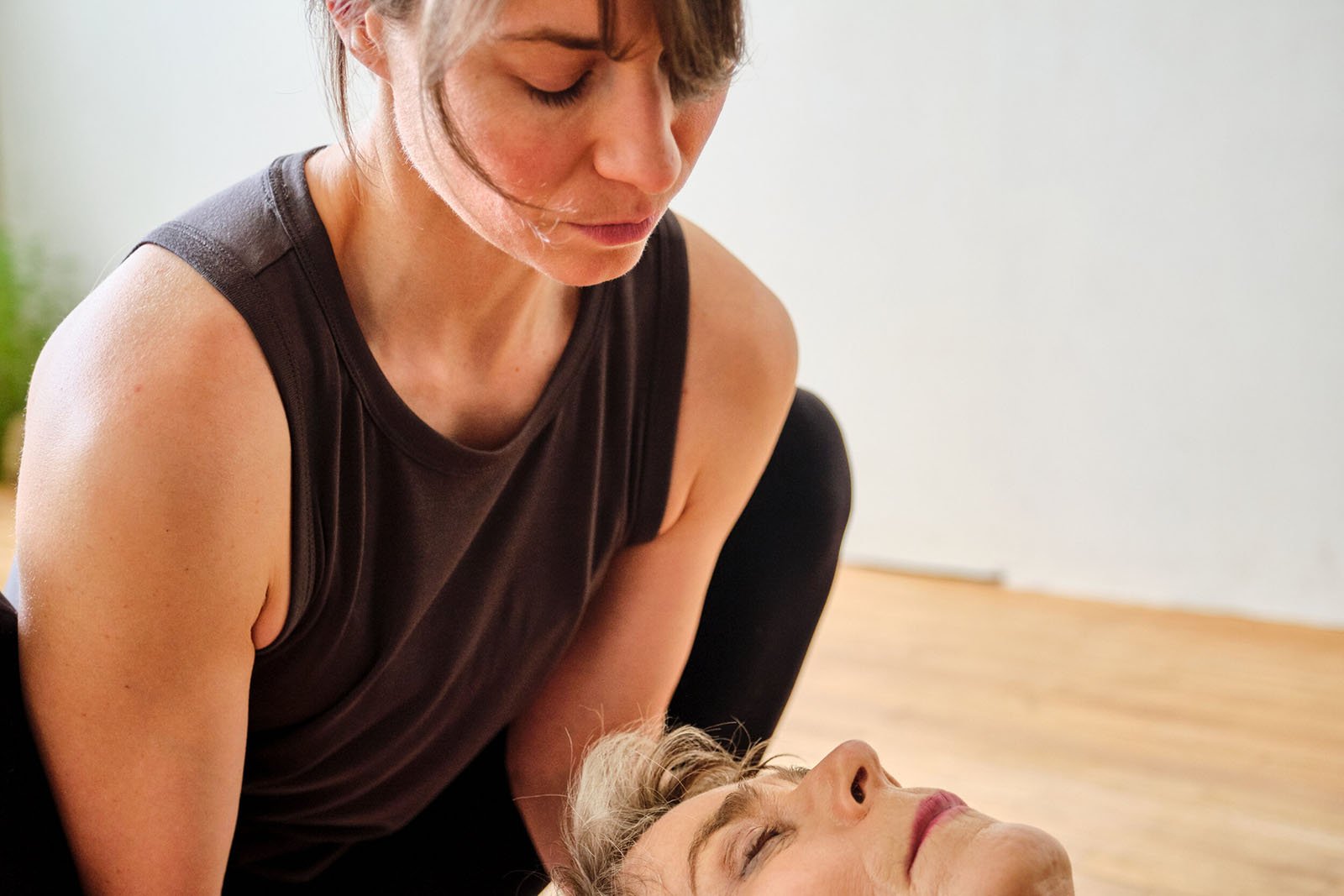
About Sarah: Sarah Baumert is known for her thorough and diverse instruction and her dedication to holding space for individual personal discovery. She facilitates whole body alignment in her students as a way for them to access balance, strength, mobility and physical clarity. Through sensory rich movement experiments, she guides students in cultivating mindfulness and deepening their learning process.
Her experience includes working with people suffering from chronic pain, injury, illness, and other forms of dis-ease. She works with a variety of populations including athletes, seniors, artists, dancers, children, and those recovering from injury, using pain management, and alignment. Sarah is a certified Yoga Therapist, an Authorized Feldenkrais Awareness Through Movement® Teacher and Feldenkrais Functional Integration® Practitioner. Her objective is to acquire the most effective skills for helping her students live with less pain and more pleasure in their bodies.
Testimonials
What people are saying about Sarah's teaching and this course
“I walked today, and could really connect with the shoulder and torso movements that support/energize walking from our Wednesday night lesson! This series is promoting new body awarenesses for me around easeful walking and everyday movement.” - Linda
”I am so grateful that you continue to provide these life giving, body strengthening and soul nurturing classes. They are like an inner meditation for every cell in my body!” - Rosie
”After I switched to the ‘regular’ yoga class, I realized I missed how I felt during and after Feldenkrais. I experience an ease of being, a soft wholesomeness, in Feldenkrais. I meditate most mornings, and I sometimes find that same stillness after Feldenkrais. Also, ease of movement: I am always struck at how gracefully I can move a limb compared to how the limb starts out.” -Elizabeth
”What I love so much about your classes: when the unexpected happens, like a jigsaw puzzle falling into place. Keep surprising me!” - Jane
”I find your classes to be exceptionally supportive and illuminating, and I’ve so benefitted from the learning and the unlearning I’ve experienced. Drop by drop, this practice and what I’ve received from your teaching have radically changed how I am in my body and in my life. These online Feldenkrais courses have become some of my favorite practices ever, and I’m excited every time you propose a new series.” - Betsy
”After these lessons, I often feel like I am “floating”. I continue to realize, in real time and activities like walking, the connection between all parts of my body….the supple power that moves up and down my spine, from my head to my pelvis. - Helen”
This is a non-judgemental, non-corrective way to experience your body in motion. There is no correct stride to copy and nothing to force. You learn at your own pace, and lessons suit all levels, moving through lying on your back and side, sitting, standing and walking.
If any of this sounds familiar, whether walking has started to feel stiff or effortful, balance feels less certain than it used to, or strengthening exercises have not made walking feel any easier, it might be time for a different approach. Give it twenty minutes and see how walking with ease feels when the whole of you takes part.
Frequently Asked Questions
-
Yes. Feldenkrais lessons explore the whole body movements that sit underneath a walking stride, including how the spine, pelvis, shoulders and feet coordinate. By becoming aware of restrictive habits in the hips and torso, you can let go of effort you do not need and find a freer, more confident and easier walk. It is movement education rather than medical treatment.
-
They are slow, gentle, verbally guided movements, mostly done lying on the floor, with short explorations in sitting, standing and walking. Rather than repeating a drill, each lesson explores a pattern that walking depends on, such as the relationship between the hips and shoulders, so you can find the easiest way to do it and then take it into your walking.
-
Yes. No experience is needed, and the lessons are designed so anyone can follow them. Movements are small and done within a comfortable range, and you are encouraged to go at your own pace. Walking is a good first topic because the changes are easy to notice in everyday life.
-
Gait training usually focuses on the step itself, through strength work and repeating the walking pattern. Feldenkrais works on what walking depends on, such as how freely the pelvis, spine and ribs move, so a better stride becomes available without forcing it. If you are doing gait training with a physical therapist, Feldenkrais can sit alongside it.
-
Balance relies on sensing your body's position in space, and Feldenkrais lessons refine that awareness so you can detect and respond to imbalances more easily. Fear of falling often makes people tense up and hold their breath, which limits movement. Gentle lessons that support easier breathing and a calmer nervous system can help you respond to unsteady situations more effectively.
-
The walking lessons are gentle and suitable for many people recovering from hip or back surgery or managing chronic pain. You choose how much effort to use, and nothing asks you to push through discomfort. Check with your surgeon or physical therapist before starting if you are still very early in your recovery stage.
-
Most lessons need only a firm surface to lie on and something to support your head. For the sitting and walking parts, you will need a stable chair and enough space to take a few steps.