
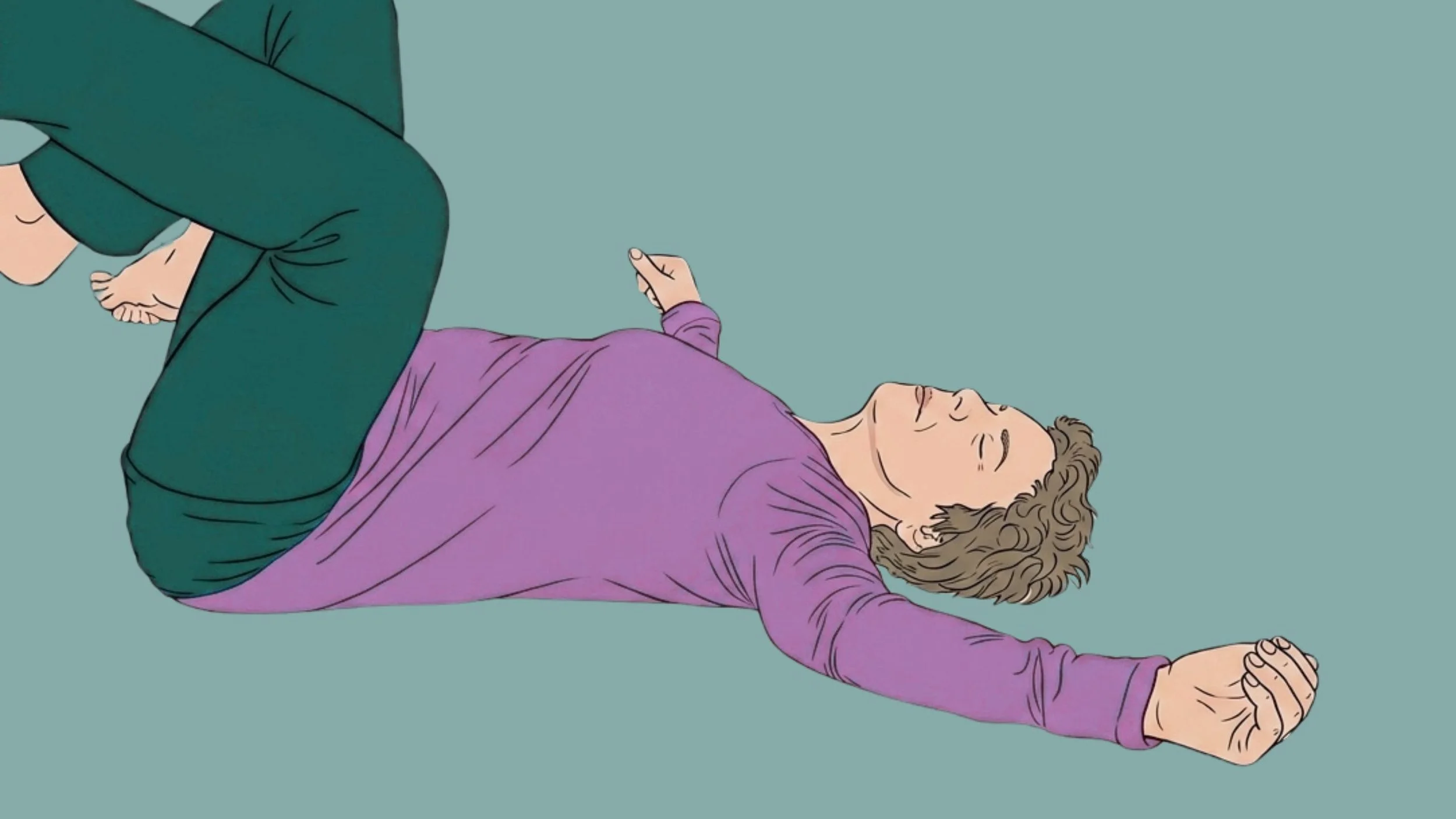
Feldenkrais and the Pelvic Floor
Gentle Exercises and Awareness
Most pelvic floor advice starts with the same instruction: squeeze, hold, release, repeat. For some people that helps. For a lot of people it does not, and for some it makes things worse.
The Feldenkrais Method takes a different route. Instead of asking you to work harder at a muscle you cannot see, it works through attention and gentle movement, using the whole of you rather than one isolated part. The pelvic floor does not act on its own. It responds to your breath, your ribs, your hips, the way you sit and the way you carry yourself through a day. Change those relationships and the pelvic floor changes with them.
This page is a starting point. It covers what the method is, why a gentle approach often suits a tight or overworked pelvic floor better than strengthening, and where to go next depending on what you are looking for.
What a Feldenkrais approach to the pelvic floor actually involves
The Feldenkrais Method is a form of movement education. You are not being treated or corrected. You are being given conditions in which you can notice what you are doing and find an easier option.
A central idea in the method is to reduce the force you create in your muscles in order to maximize the information available for feedback. Practicing intelligently means reducing effort so that sensation becomes more refined. Lessons are slow, usually done lying down, and the movements are smaller than most people expect.
The method also pays close attention to the skeleton. If you take Feldenkrais classes you will hear a lot about skeletal structure and architecture, and the reason is simple: skeletons do not get tired. The skeleton solves the problem of being upright in gravity far better than soft tissue does.
Most of us, most of the time, use more muscular effort than we need just to stay upright, which means energy is spent on holding ourselves up rather than on whatever we actually want to do. Supporting yourself through your skeleton frees the muscles to work efficiently, and that includes the pelvic floor.
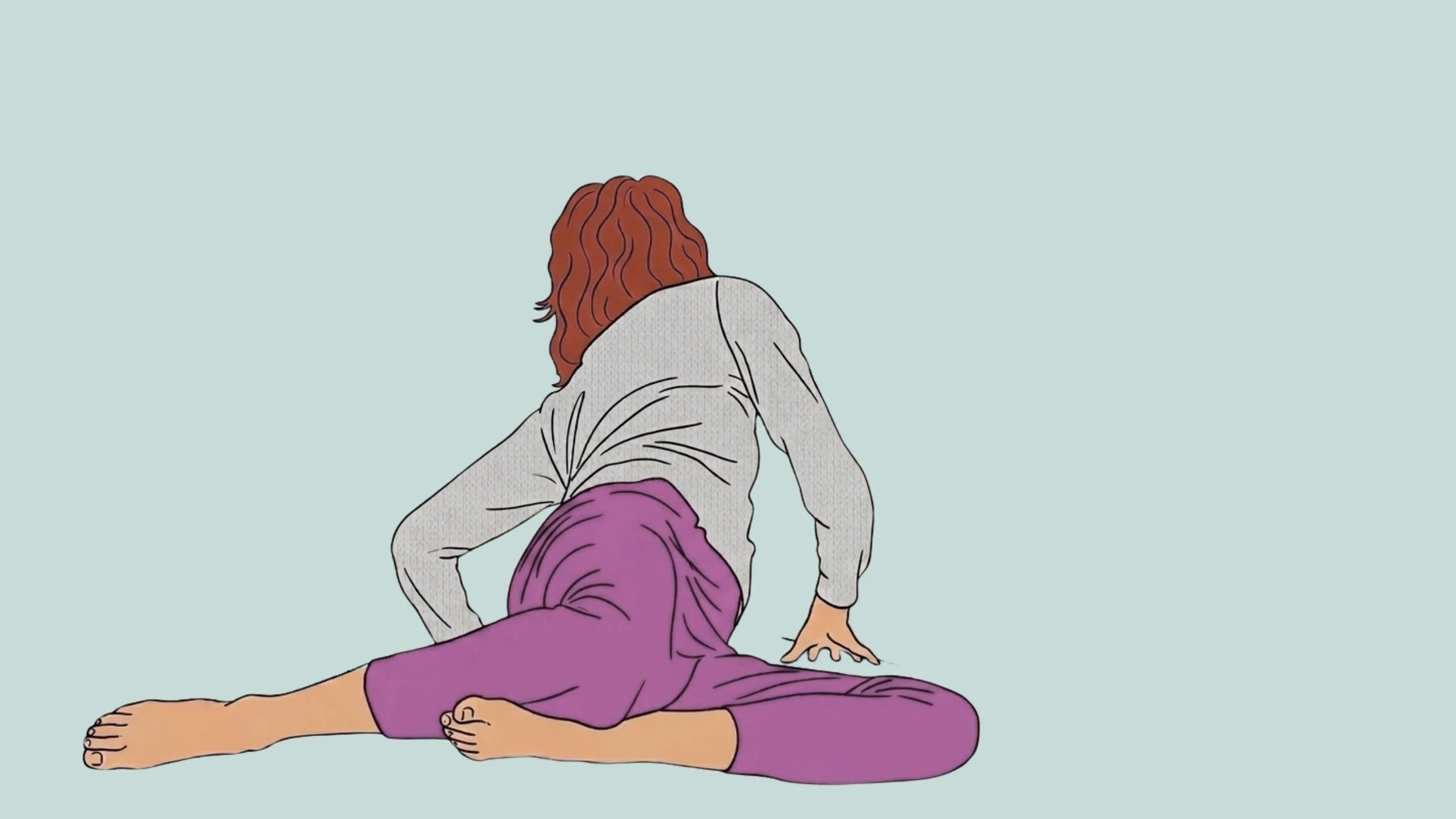
If you have never done a Feldenkrais lesson before, no experience is needed. You do not need to be flexible, fit, or familiar with any of the terminology. Here is what to expect in a Feldenkrais Awareness Through Movement lesson.
Why relaxing the pelvic floor is the route to strengthening it:
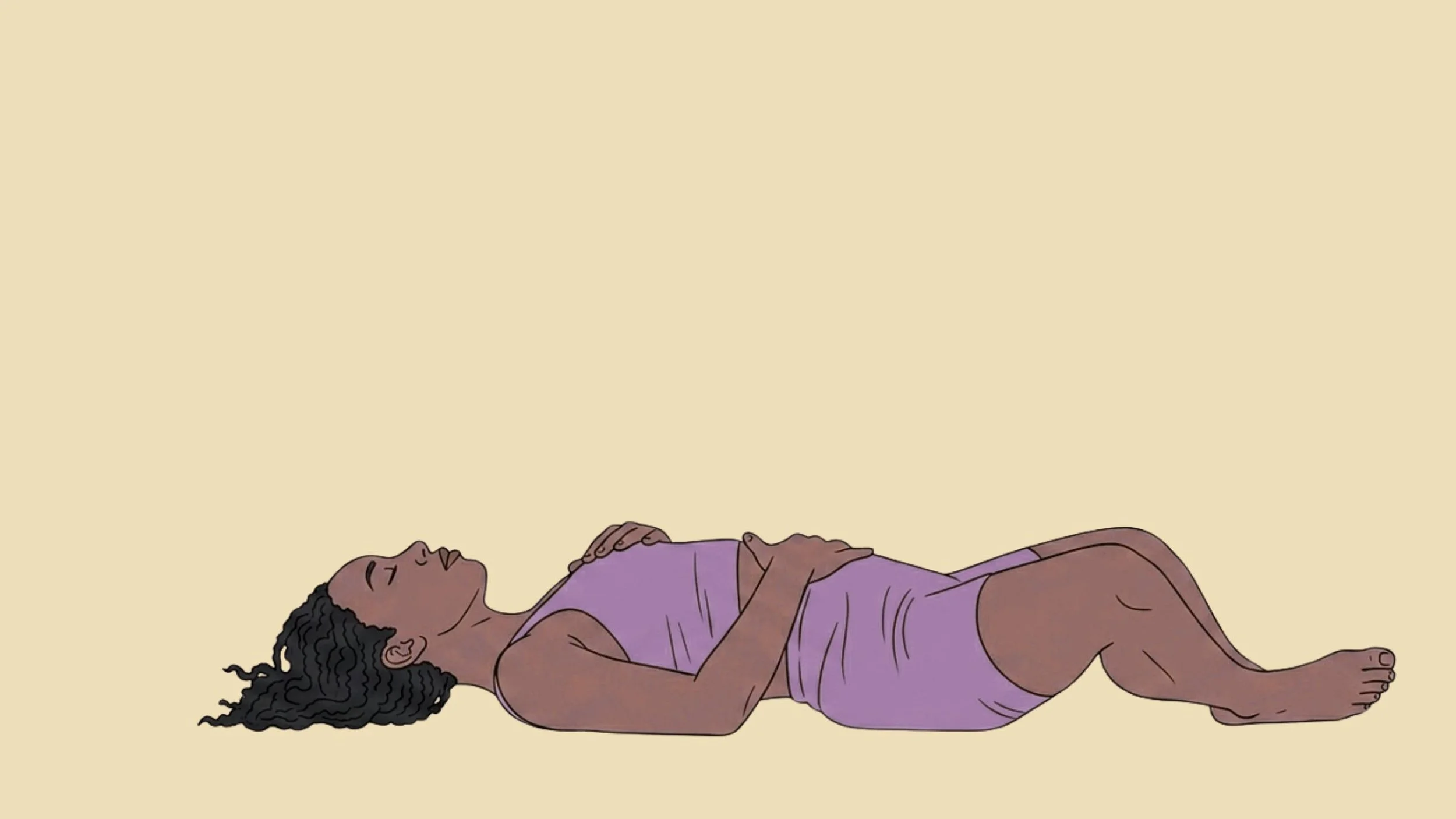
There is an assumption built into most pelvic floor advice that the problem is weakness. Sometimes it is. But a pelvic floor can also be doing too much, holding tension it never releases, working overtime to stabilize a body that does not feel supported elsewhere.
It can seem paradoxical to relax a muscle in order for it to become stronger. But a muscle that is always contracted has less capacity to contract any further and less ability to move through its dynamic range. A habitually contracted muscle is typically a weak muscle.
So the practice is learning how to relax the pelvic floor and deep abdominal muscles so that you can engage them when they are actually needed. This is not a matter of isolating the pelvic floor with exercises like Kegels. It is a matter of becoming aware of compulsive muscular tension in the pelvis and abdomen, letting it go, and then integrating these muscles back into ordinary everyday movement.
If you have been doing pelvic floor exercises diligently and feeling no better, or feeling worse, this distinction is worth sitting with.
That usually means:
Reducing effort until the movement is easy enough to be interesting
Working with the breath rather than holding it
Coordinating the pelvic floor with the movement of the pelvis, hips and spine rather than just isolating it
Paying attention to what changes, not to how much you achieved
Stopping well before fatigue
None of this asks you to push through discomfort. If something hurts, it is information, not an obstacle.
“I can’t thank you enough, Sarah! Your classes have become a foundation to my overall health and well being. These deepen my body-awareness like nothing else.”
Related Podcasts
If you would rather listen than read, this episode covers the same ground in Sarah's own words.
Episode 88: A Feldenkrais® Approach to Pelvic Floor and Abdominal Health
An informational podcast about pelvic floor and deep abdominal health. Pelvic floor health and abdominal strengthening is one of the most requested topics I get from students. I will be discussing why pelvic floor health is so important and give you some context for the courses.
Episode 89: Rolling a Ball from Hip to Hip with Pelvic Floor Awareness
This mini Feldenkrais lesson is an example of the direction that the lessons will start to take in the Pelvic Floor and Deep Core Rapport Series. We will use the pubic bone, the tailbone, and the creases of the hip joints as anatomical places of reference and awareness.
Go deeper with the full courses:


Pelvic Floor and Deep Core Rapport Feldenkrais Course
Pelvic Floor and Deep Core Rapport takes everything on this page and builds it into a complete, step-by-step course. You'll be guided through clear anatomy lessons and progressive movement practices that show you exactly how the pelvic floor, breath, and deep core work together—along with short mini-lessons you can easily drop into your day. It’s a flexible approach that helps you build awareness and integration at your own pace.
“I just finished doing lesson two in this series and am surprised at how much more I am now aware of my pelvic floor. I still use imagery to help, but sometimes I feel the floor clearly. Wow! Pretty powerful. I know this is helping the other parts of my body heal too.”
”I love the visual musculoskeletal bits at the start of lessons. That really helps me visualize the anatomy throughout the lessons.”
Other Pelvic Focused Feldenkrais Courses:
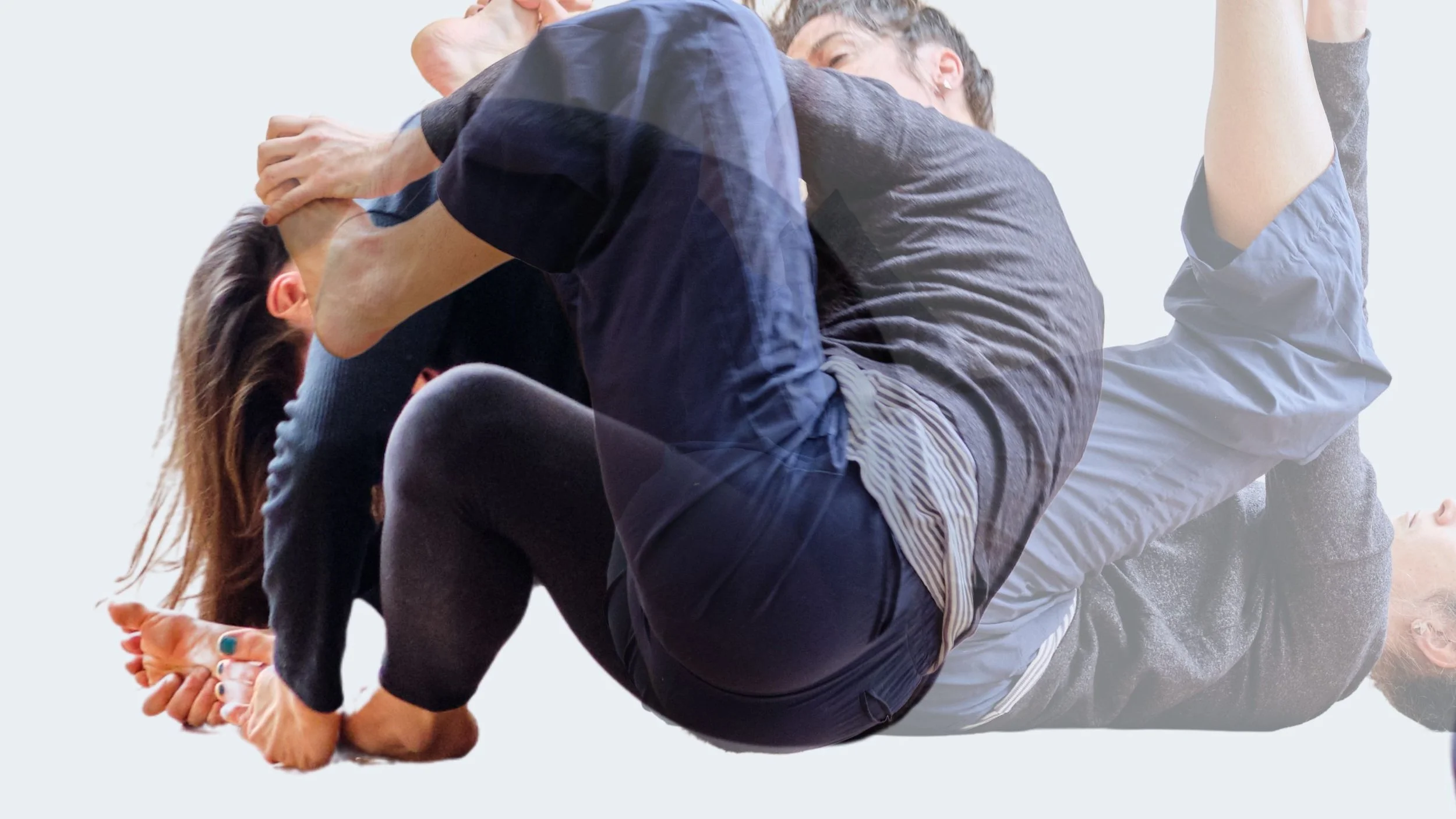
Your Poetic Pelvis Feldenkrais Course
This series will help you improve and clarify the fundamental movements of your pelvis for more effective action in your daily functions like walking, standing, and sitting.
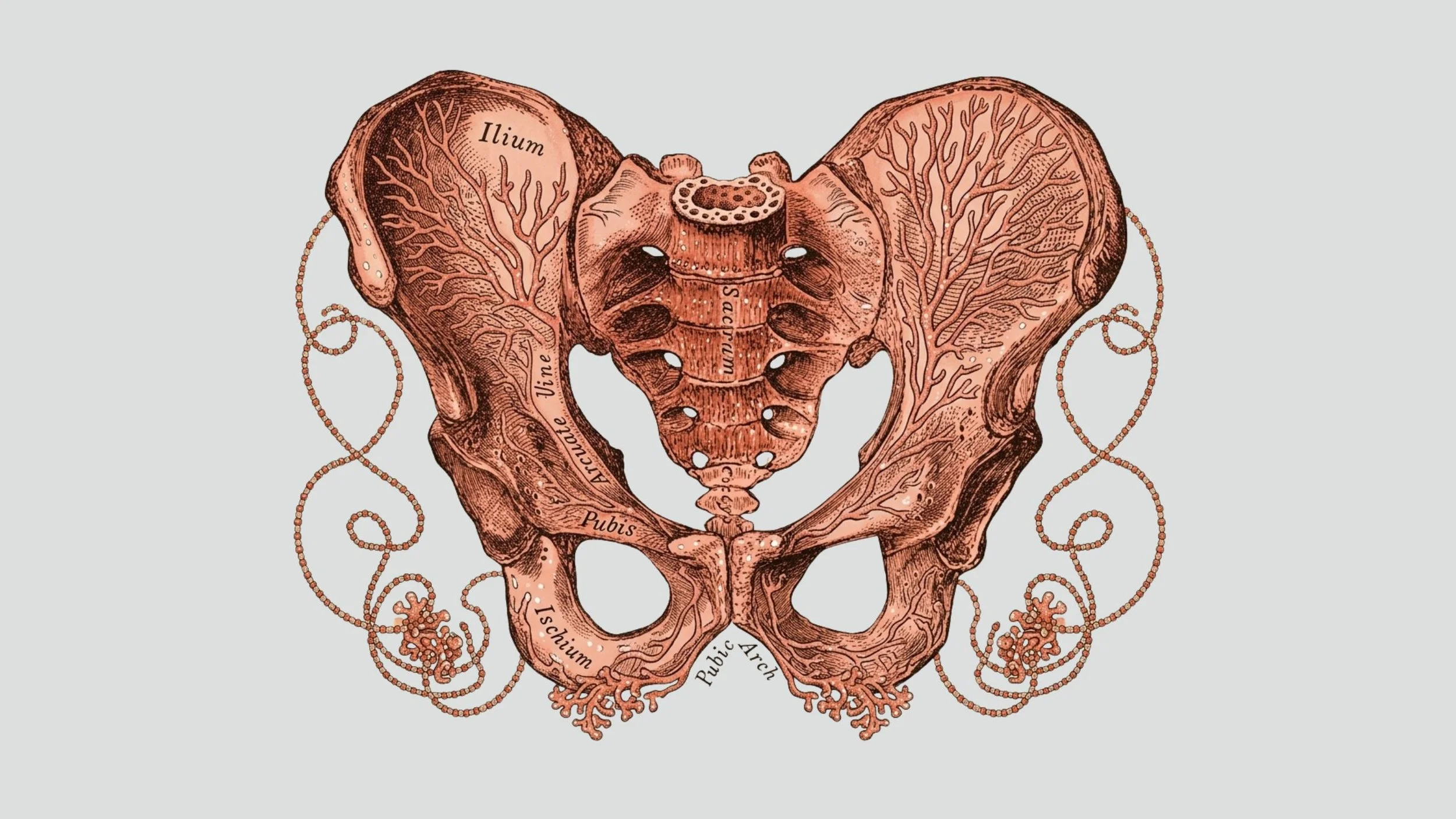
Ease, Grace, & Power: Mobilizing the Pelvis Feldenkrais Course
Over eight sessions, we will explore the pelvis and its connections to the whole self with classes Feldenkrais lessons like the pelvic clock.
Yoga + Feldenkrais Blended Course:
Integrate Pelvic Floor, Hips, & Abdominals: Yoga + Feldenkrais Blended Course
This series, which blends yoga and the Feldenkrais method starts by learning pelvic floor mapping, an essential tool for accessing pelvic floor healing, strength, and recovery. Over ten classes we will mobilize and stabilize the hip joints in ALL directions while coordinating the pelvic floor and abdominals with these hip and pelvis movements. These classes will work with the body as a whole functioning system, not a collection of parts. While the access point of our learning will start with the pelvic floor, hips, and abdominal complex, you will still experience a well rounded practice.
Understanding the Difference: Yoga, Feldenkrais, and Sarah’s Blended Approach
While both traditional Yoga and the Feldenkrais Method® cultivate a deeper connection to your body, they approach movement from slightly different philosophies. Traditional Yoga Asana focuses primarily on posture, alignment, strength, and flexibility. In a standard yoga class, it’s more common for the instructor to visually demonstrate established shapes. The student holds postures while the teacher guides you through breathwork and alignment cues.
By contrast, a classic Feldenkrais® Awareness Through Movement class is entirely non-visual. The teacher rarely demonstrates the movements; instead, the entire class is verbally guided. Students explore subtle, gentle micro-movements and novel variations at their own pace, focusing on neuromuscular re-education, releasing habitual effort, and discovering more efficient movement pathways through direct internal experience.
Our Yoga + Feldenkrais Blended Class bridges these two worlds to create a truly unique movement experience. Rather than choosing between the structured flow of yoga or the purely subtle exploration of Feldenkrais, these classes infuse traditional yoga asanas with the intelligent curiosity of Awareness Through Movement. Through a dynamic mix of clear visual demonstration and rich verbal guidance, we expand beyond standard poses to create an interdisciplinary excursion—incorporating movement puzzles, joint-specific conditioning, self-massage, and targeted breathing exercises. Rather than forcing your body into rigid yoga postures, you learn to use Feldenkrais principles to unravel tension, solve movement challenges, and tailor every pose to your unique anatomy. Rooted in a compassionate mindset, this approach helps you move past physical striving so you can walk away feeling a genuine sense of ease, comfort, and freedom in yourself.
Why Choose the Blended Class?
Whether you’re seeking the mindful flow of yoga without the pressure of perfect poses, or you thrive on having a visual model to follow while exploring movement, our blended format offers the best of both worlds.
See the difference for yourself:
Where the pelvic floor is and what it does:
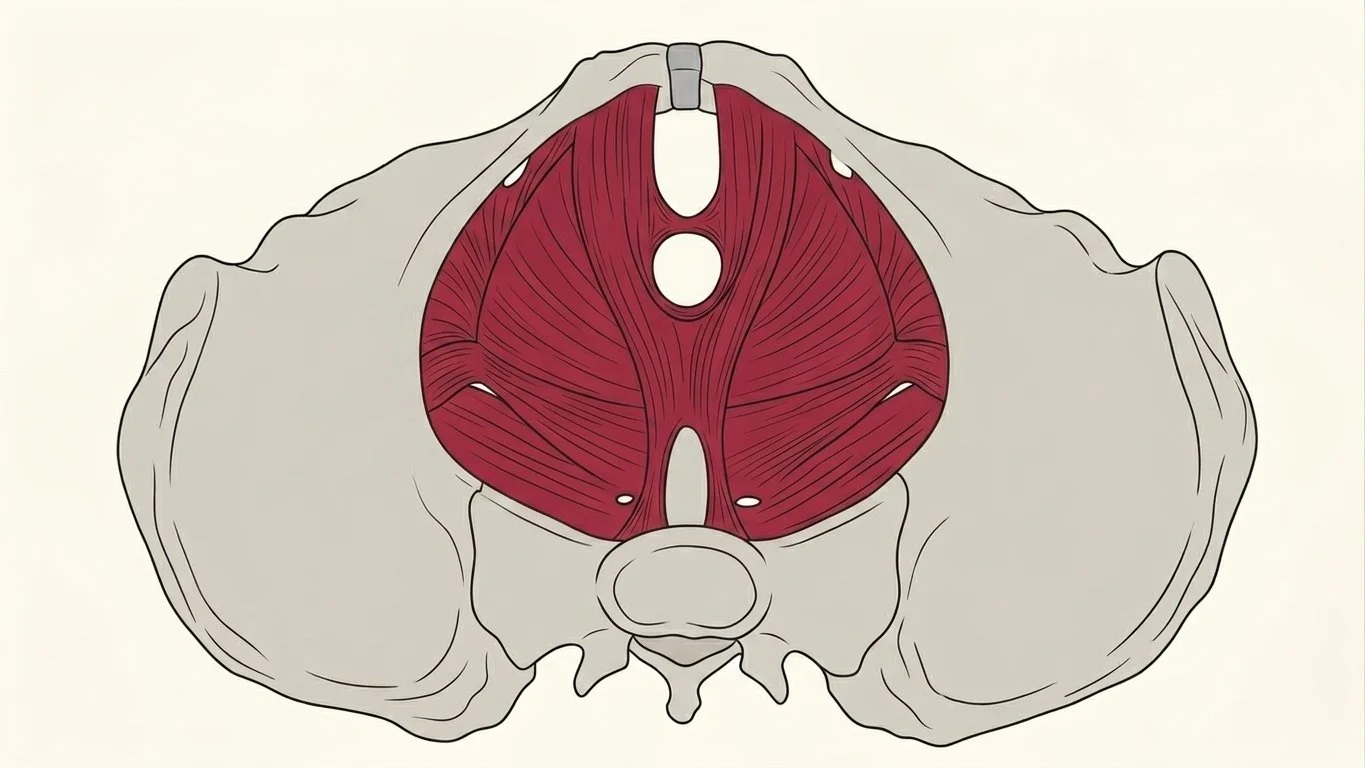
The pelvic floor lies like a flexible hammock at the base of the pelvis. When it is well supported it behaves more like an arch, doming upward. It can move and change shape, more similar to a trampoline than a fixed sheet.
The pelvis itself is shaped like a bowl, with the tissues of the pelvic floor covering the base of that bowl. Those tissues are made of muscle, ligament and connective tissue, and they attach to bony landmarks you can find on yourself: the two sitting bones at the sides, the pubic bone at the front, and the tailbone at the back. Those four points mark the boundaries of the pelvic floor and they are the reference points you will keep returning to.
A healthy pelvic floor responds to what the rest of you is doing. Like any muscle it can become contracted and locked up, or loose and weak. What you want is a dynamic range of tone available across the whole of it, not maximum tightness.
The pelvic floor and the breath move together
The pelvic floor can act as both a voluntary and an involuntary muscle. You can consciously contract and release it, and it also responds without your involvement, in the same way your breathing does.
The breathing diaphragm and the pelvic floor are closely related. At rest, the diaphragm moves down and up with each breath, and a responsive pelvic floor does the same thing: doming up like an arch, then settling down like a hammock.
You can override your breath consciously, speeding it up, holding it, lengthening it. It also changes on its own when you are stressed, when you are moving, and in response to emotion. The pelvic floor is part of that same system.
This is why so much of the work uses the breath as the way in. Rather than instructing the pelvic floor directly, we use breathing to bring awareness to it and to draw in the neighbouring muscles that help it work well: the internal and external hip rotators, the inner thighs, the deep abdominals and the buttocks.
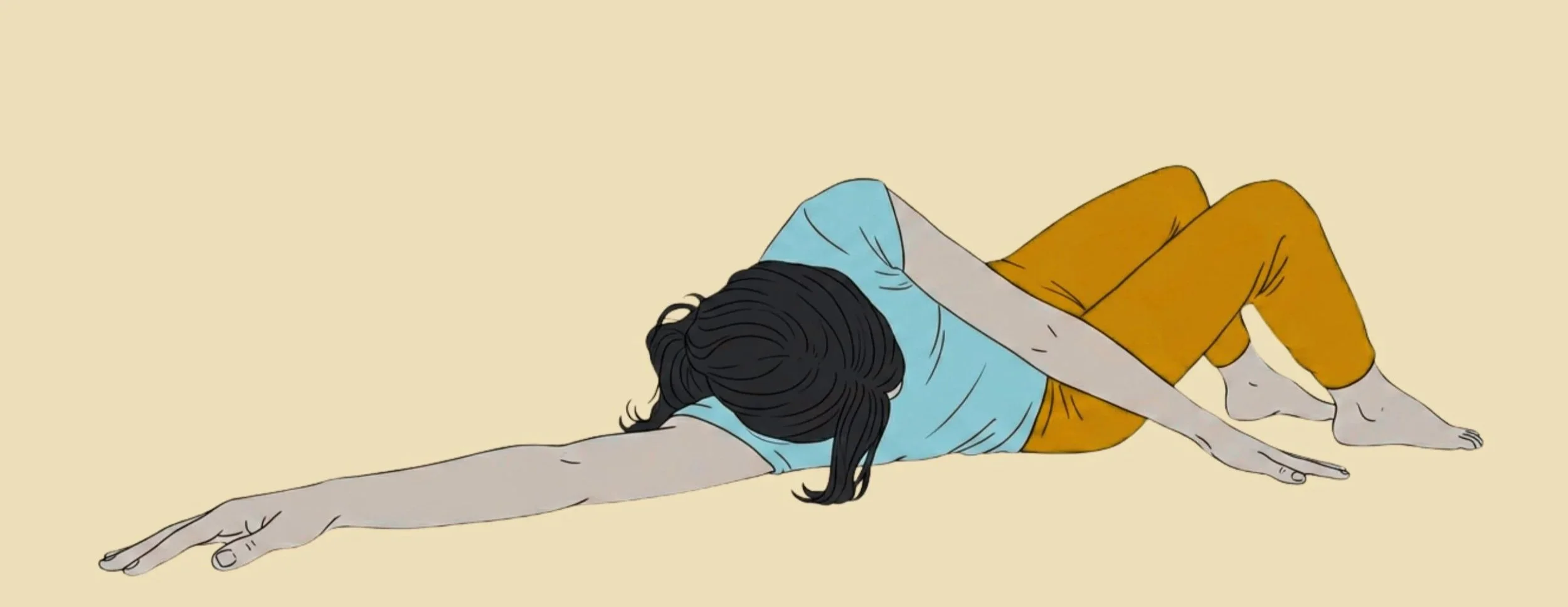
Habits, stress, and what sitting does to the pelvic floor
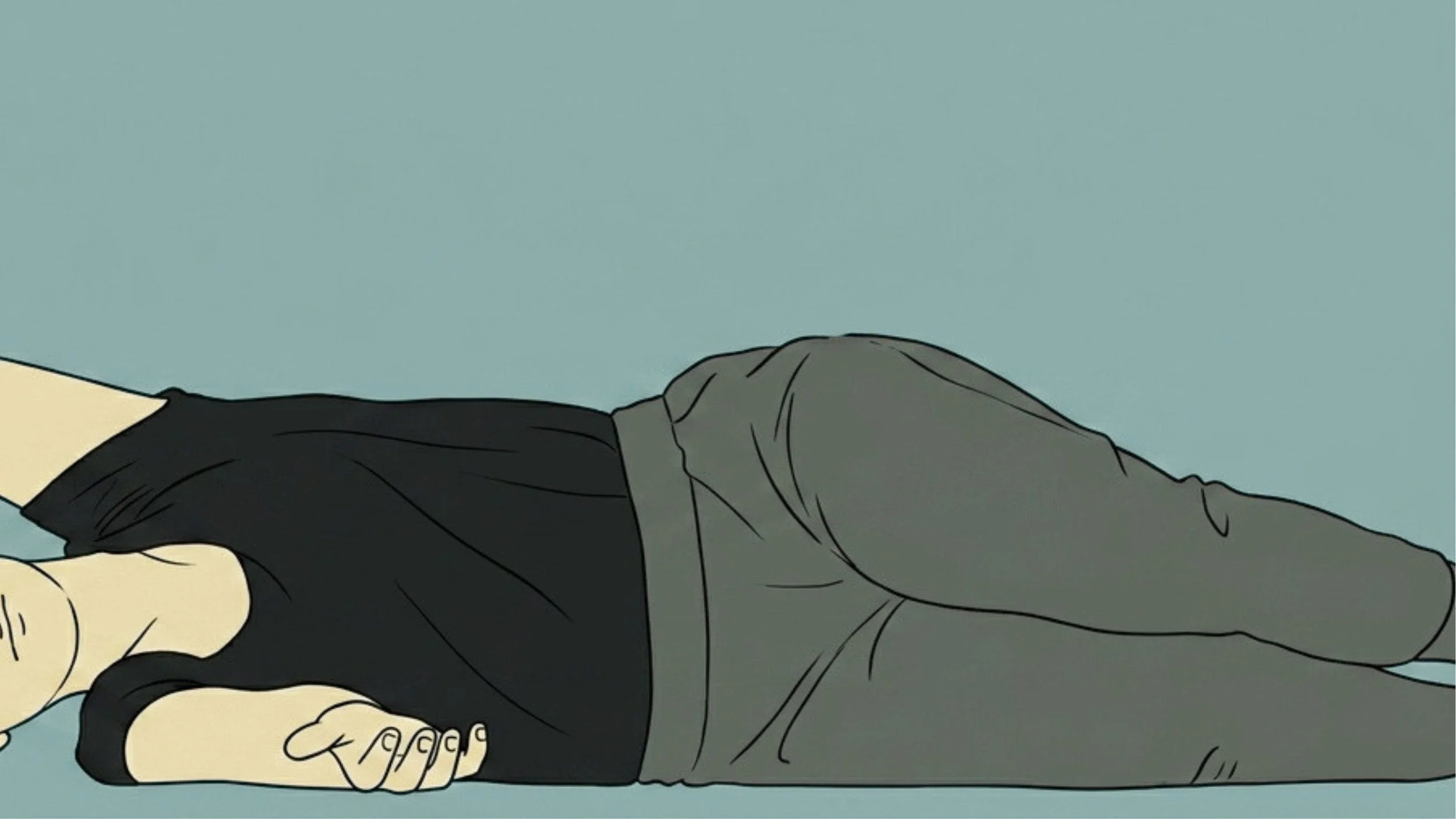
Everyone has habitual ways of doing things. Some are obvious, like which hand is dominant. Others are much harder to detect, like biasing your weight onto one leg every time you stand.
The pelvic floor has habits too, which are subtler still because the movement is so small. A pelvic floor can become weaker in one area, on one side, or more towards the front or the back. Those imbalances can come from giving birth, aging, menopause, emotional or physical trauma, repetitive stress, and breathing imbalances.
The whole pelvic floor and abdominal system is also very responsive to stress. You have voluntary control over this area, but it responds unconsciously as well, the same way your breath tightens when you are under pressure. The pelvic floor, abdominals and back are all part of the breathing system, so they tighten too. That can settle into a steady state and become a habit, which leads to pain, discomfort, or difficulty feeling either sensation or strength there.
Sitting changes the picture as well. Long periods of sitting put more pressure on the abdomen and remove the need to use the abdominal muscles at all, which increases tension in the floor. You are effectively training the pelvic floor never to engage. Pelvic conditions—including hip pain, sacroiliac joint dysfunction, pelvic floor issues, and inadequate abdominal support—are frequently compounded by inefficient postural mechanics during sitting and standing. Despite the high prevalence of sedentary behavior, proper sitting mechanics are rarely taught, resulting in persistent postural deficits.
Releasing pelvic floor tension through the rest of you:
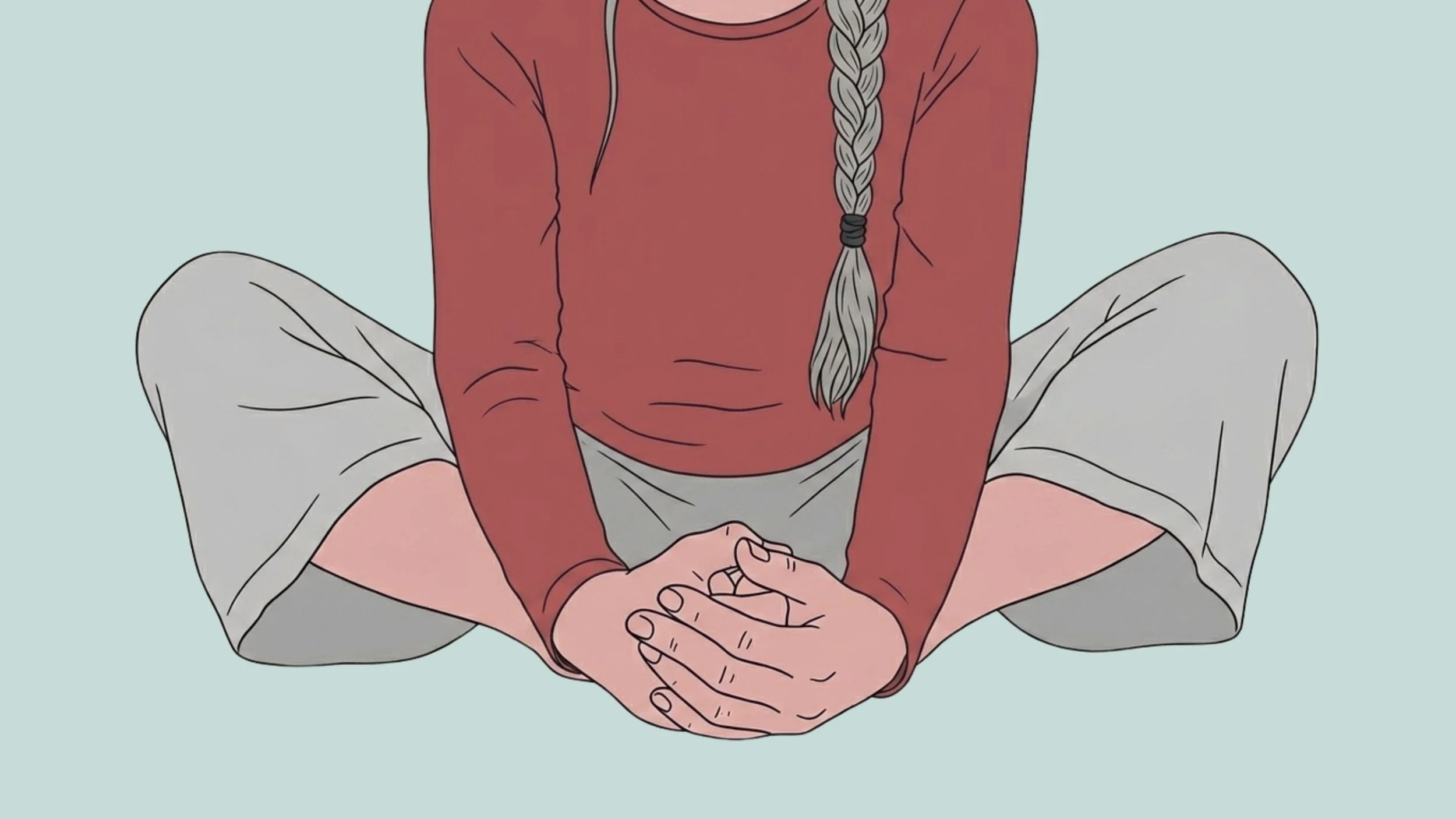
Pelvic floor tension release rarely happens by addressing the pelvic floor alone. Moshe Feldenkrais put it directly: “No correct posture is possible without the pelvis being able to move freely in all its articulations” -The Potent Self
Restricted hips force the pelvis to compensate. When the pelvis can't tip and rotate freely, the pelvic floor steps in—forced to do stabilizing work it was never designed to handle. If the breath is shallow and held high in the chest, the diaphragm and the pelvic floor stop moving together, the way they were designed to.
This is why a lot of the most effective work for pelvic floor tension does not look like pelvic floor work at all.
Explore Our Audio Lessons
If you would rather try something before committing to anything, there is a library of Awareness Through Movement audio lessons on the site. These are complete lessons rather than samples, and they are a fair representation of what the longer courses feel like.

This short Feldenkrais audio lesson uses the pubic bone, tailbone, and hip joint creases as key anatomical points of reference. You will learn to sense your hip joints as an integrated part of your pelvis while deepening awareness from your pelvic floor outward.
Perfect as a standalone practice or as a sample of what’s to come, this lesson offers a preview of the gentle, refined explorations featured in the full Pelvic Floor and Deep Core Rapport Series.

Using subtle, guided physical movements, this Feldenkrais practice trains your brain to shift between narrow sensory detail and broad spatial awareness. We bring attention to the center, deep within the bowl of the pelvis, and practice initiating all movement from this place.
Perfect as a standalone practice or as a sample of what’s to come, this lesson offers a preview of the refined explorations featured in the full Focused Body Series.
Class library membership
The Feldenkrais and Yoga Class Library gives you ongoing access to the full collection of classes rather than buying courses one at a time. New material is added weekly to the library, and you can move between pelvic floor work, walking, posture and everything else depending on what you need that week.
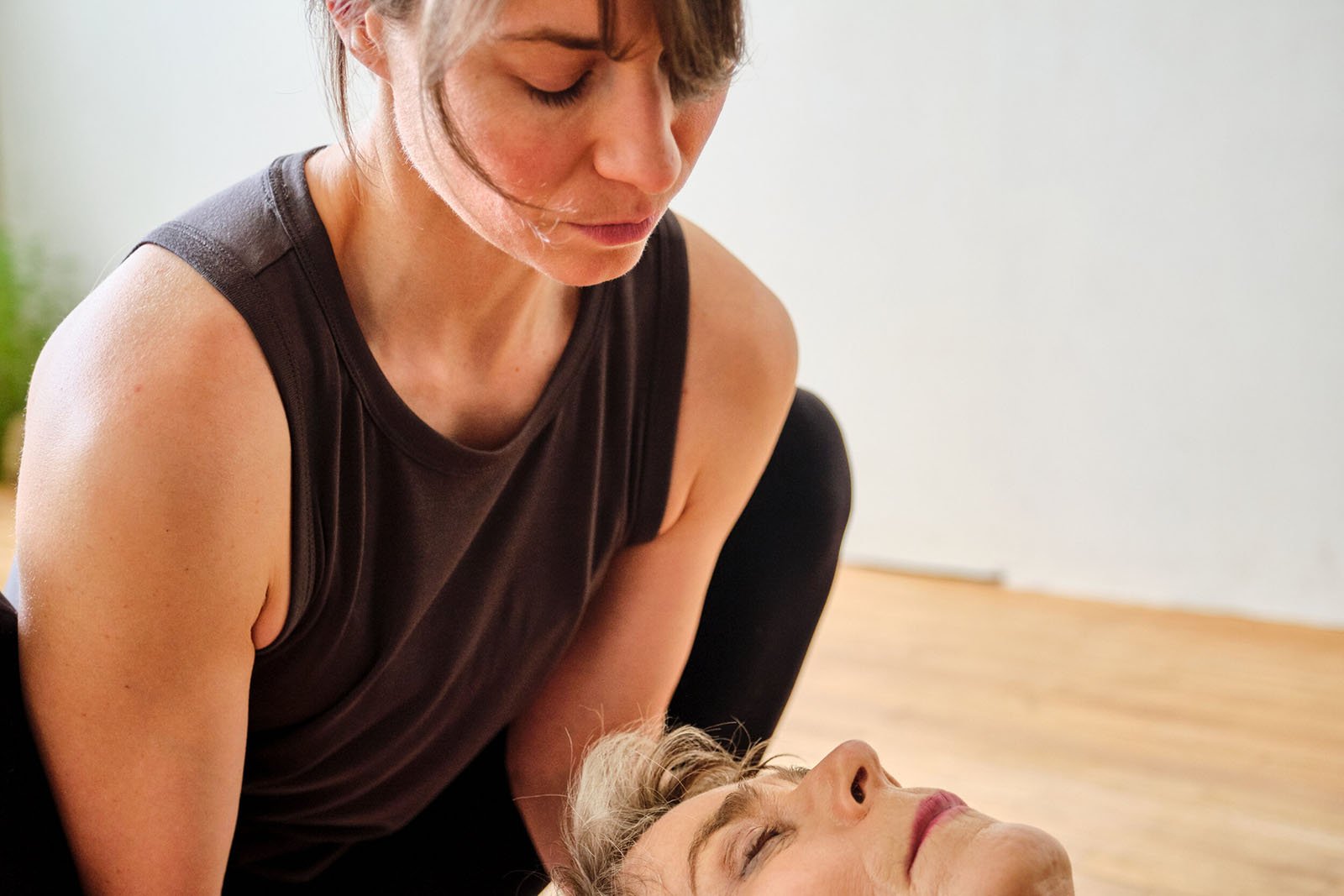
About Sarah: Sarah Baumert is known for her thorough and diverse instruction and her dedication to holding space for individual personal discovery. She facilitates whole body alignment in her students as a way for them to access balance, strength, mobility and physical clarity. Through sensory rich movement experiments, she guides students in cultivating mindfulness and deepening their learning process.
Her experience includes working with people suffering from chronic pain, injury, illness, and other forms of dis-ease. She works with a variety of populations including athletes, seniors, artists, dancers, children, and those recovering from injury, using pain management, and alignment. Sarah is a certified Yoga Therapist, an Authorized Feldenkrais Awareness Through Movement® Teacher and Feldenkrais Functional Integration® Practitioner. Her objective is to acquire the most effective skills for helping her students live with less pain and more pleasure in their bodies.
Testimonials
What people are saying about Sarah's teaching and this course
“I love how the Monday night classes interweave and focus us on an evolving practice! The instruction is very clear and Sarah’s teaching style is calm, consistent, and precise. I feel the poses in a whole new way. I look forward to this class each week and when I can’t make it I do the recorded session as soon as I can. - Mary
I never realized that the (external and inner) rotation of our legs relaxes and engages the pelvic floor respectively! That is a profound and helpful awareness I am taking into the future. Our bodies are so astonishing and I am deeply appreciative of knowing my body more intimately as I age. I am becoming more acquainted with my unique strengths and challenges, I am also learning how I can better receive aide from, and offer aide to, my body.
I am now more awareness of my pelvic floor in yoga poses; also when I move and sit. I especially liked the last two classes (feet) and the particular pose we worked up to at the end. I added them to my favorites!
These lessons deepen my body-awareness like nothing else. I think it’s a very helpful complement to somatic psychological work too.
I went back last week and repeated the final lesson…preparation for pigeon wing. I understood the lesson in a new way and was better able to focus on making it easeful. Sometimes repeating a challenging lesson is so beneficial for me, and it is just one of the things I love about having the videos available as needed/desired.
I can’t thank you enough, Sarah! Your classes have become a foundation to my overall health and well being.
”These online Yoga + Feldenkrais courses have become some of my favorite practices ever. I find your classes to be exceptionally supportive and illuminating, and I’ve so benefitted from the learning and the unlearning I’ve experienced. Drop by drop, this practice and what I’ve received from your teaching have radically changed how I am in my body and in my life.”
This is a non-judgemental, non-corrective way to experience your body in motion. You learn at your own pace, and noticing what feels good is the point rather than a side effect. Lessons suit all levels and move through a range of positions, from lying on the back or side, to hands and knees, sitting, and rolling.
If any of this sounds familiar—whether pelvic floor exercises never quite worked, tension refused to stretch away, or standard advice felt like it was written for someone else, why not try something else? Take twenty minutes to lie down, slow down, and tune into your body.
Frequently Asked Questions
-
It can help you relate to the pelvic floor differently, which for many people is what changes things. The work builds the ability to both relax and engage the pelvic floor and deep abdominals. People report changes in back pain, breathing, standing and walking, balance, balance after hip replacement or abdominal surgery, sensation during sex, bladder control, and strength and coordination after giving birth. It is movement education rather than medical treatment, so it sits alongside clinical care rather than replacing it.
-
Kegels ask you to isolate and contract the pelvic floor. Feldenkrais lessons rarely ask for a contraction at all. The aim is not a stronger squeeze but a pelvic floor that can respond appropriately, tightening when it needs to and releasing when it does not.
-
Yoga generally works towards a form or posture. Feldenkrais works towards better sensing, with no correct shape to arrive at. The movements are smaller, slower, and usually done lying down, and there is nothing to achieve or hold.
-
The pelvic floor, abdominals and back are all part of the breathing system, and they tighten under stress whether or not you notice. Because these lessons work with the breath and through reducing effort, they tend to affect that pattern directly.
-
Generally yes, because the work is gentle and never asks you to push through discomfort. Effort level is yours to choose. If you have a diagnosed pelvic floor condition or you are working with a pelvic health physical therapist, speak to them before starting.
-
No experience needed. Most lessons need only a firm surface to lie on and something to support your head. Some use a small ball or a rolled towel, and this is always noted at the start.
-
Many people do, but it depends on your circumstances and stage. Check with your midwife, doctor or pelvic health physical therapist first.