
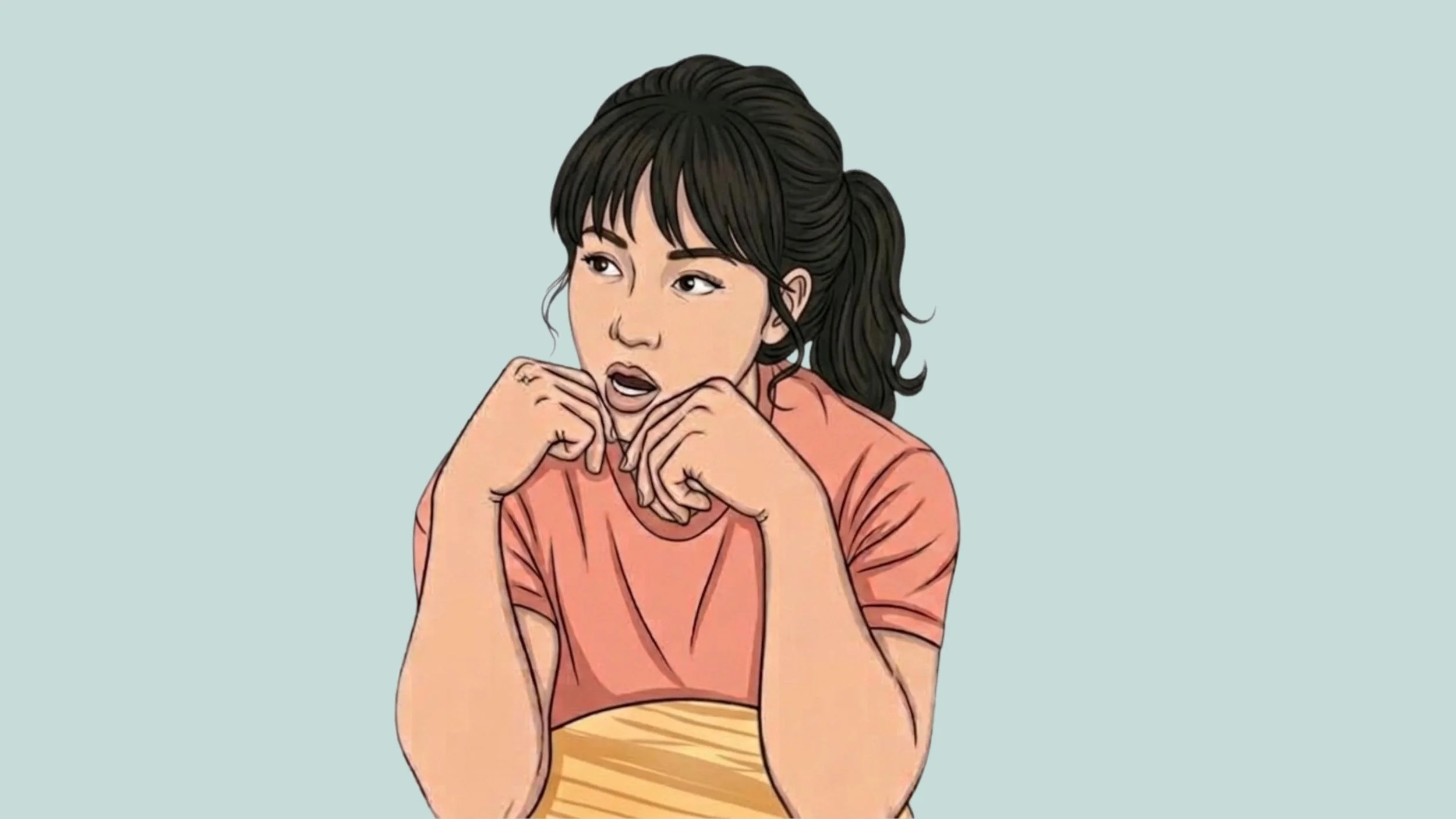
Feldenkrais and the Jaw
Gentle Exercises for Jaw Tension and TMJ
Most advice for a tight jaw comes down to one instruction: stop clenching. If you could simply stop, you would have stopped already. Clenching is not a decision you are making.
The Feldenkrais Method takes a different route. Instead of telling you to release something you cannot feel yourself doing, it works through attention and gentle movement, using the whole of you rather than one isolated joint. The jaw does not act on its own. It works with your tongue, your eyes, your breath, your neck and shoulders, and even your pelvis. Change those relationships and the jaw changes with them.
The mouth takes up roughly 30% of the sensory motor processing center of the brain, which is a large share for a small area. Dr. Feldenkrais found that working with the jaw and the tongue was a particularly effective strategy for anxiety, because so much of what we hold emotionally settles there.
This page is a starting point. It covers what the method is, why gentle attention reaches jaw tension when forcing it rarely does, and where to go next depending on what you are looking for.
What Feldenkrais jaw exercises actually involve
The Feldenkrais Method is a form of movement education. You are not being treated or corrected. You are given conditions in which you can notice what you are doing and find an easier option.
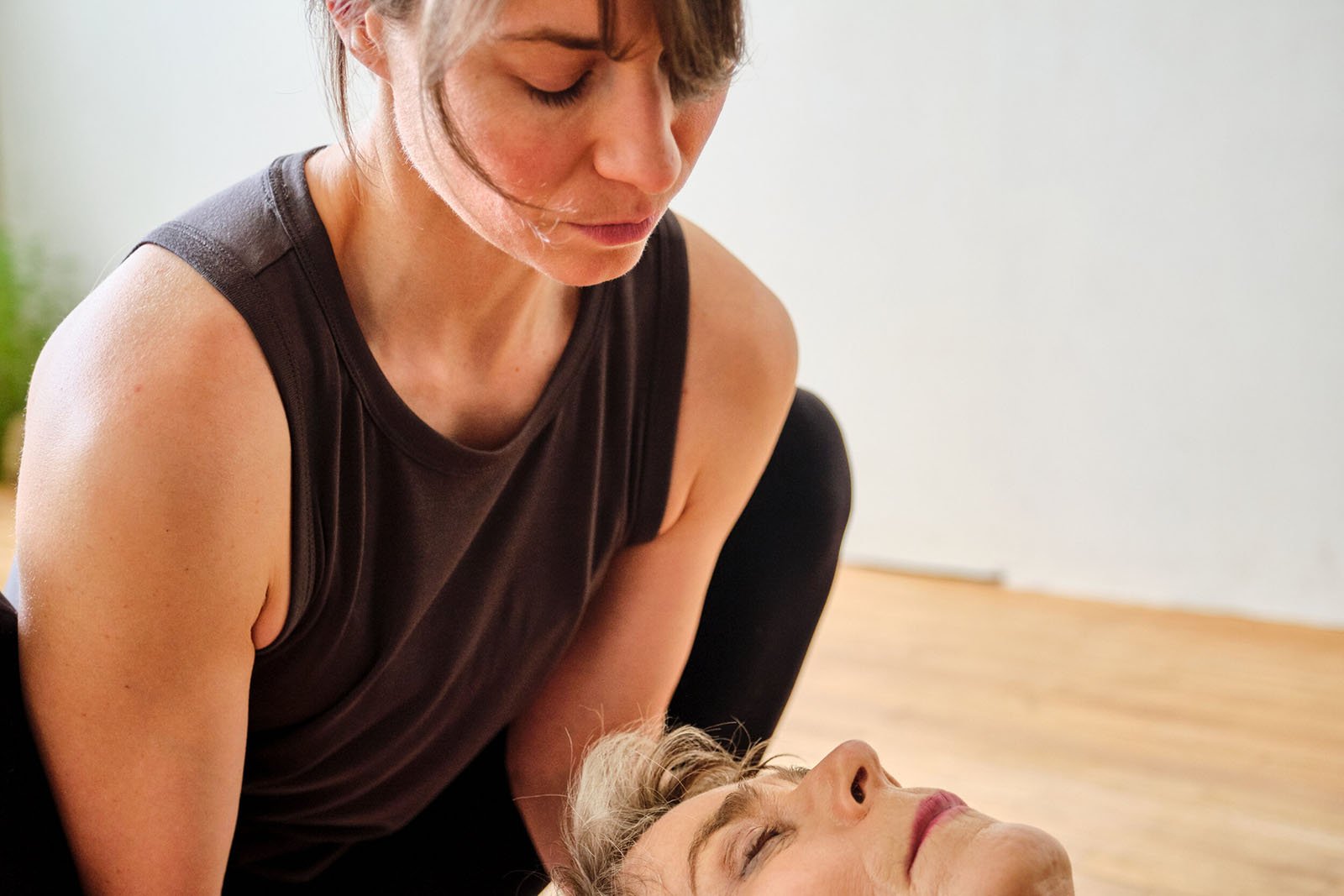
Lessons are verbally guided and most are done lying on your back or side, so your head is supported and your neck has nothing to hold. The movements of the jaw are small, slow and always within a comfortable range. Nothing asks you to open wide, stretch the joint, or work into pain.
A lesson rarely stays in the jaw alone. You might explore how the tongue rests and moves, how the eyes travel, how the head turns, how the breath changes when the mouth softens. Working in these areas often releases tension elsewhere in the body, including the lower back, hips, shoulders and abdomen, which surprises most people the first time it happens.
The rests between movements are part of the lesson. That is when the brain compares, and when the change settles.
“I felt as my jaw relaxed, I could feel my pelvis relaxing. I have had a lot of lower back tension and it was so delicious to be moving slow enough so that I could feel it understanding that it doesn’t have to do all the work.”
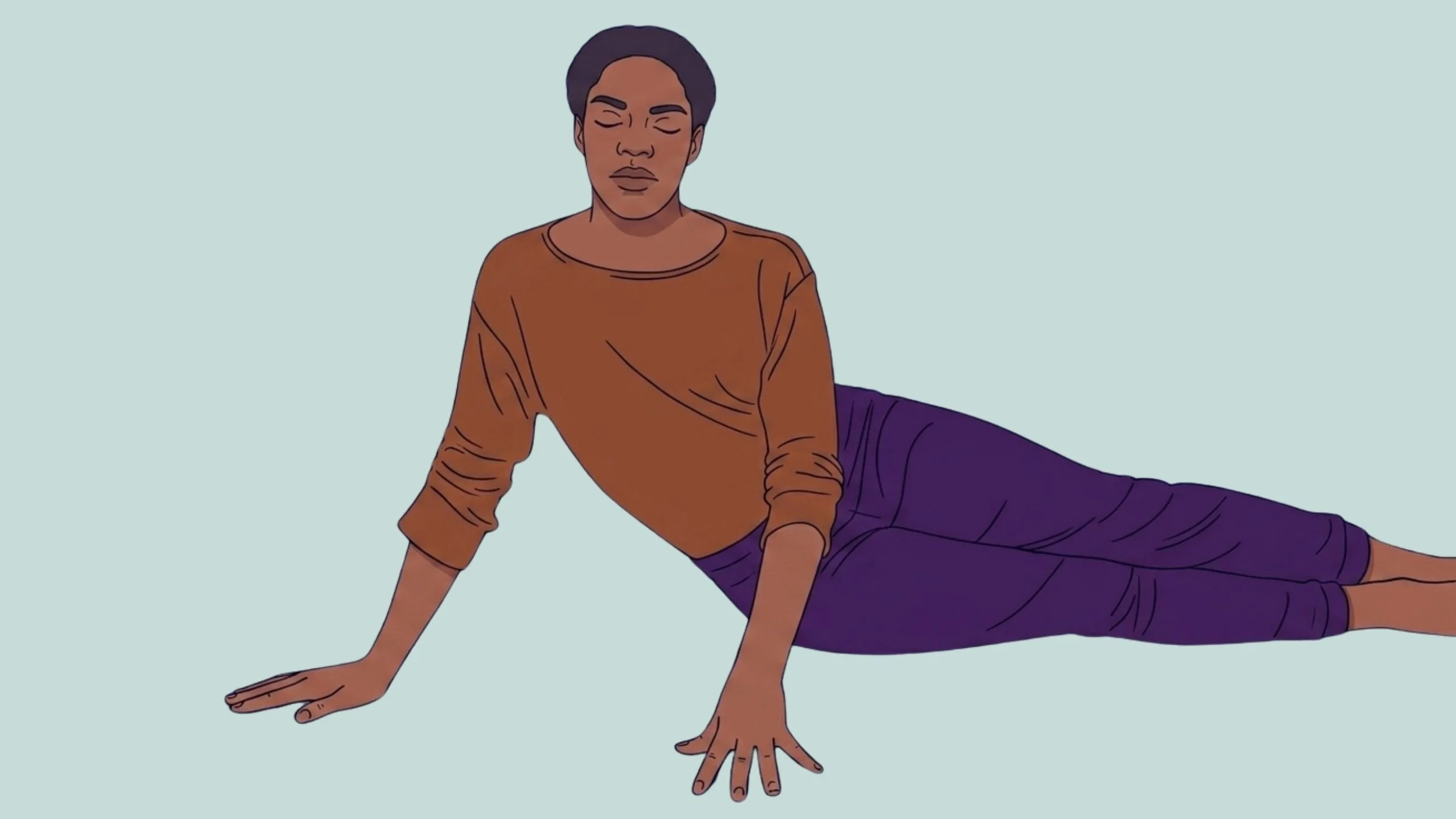
If you have never done a Feldenkrais lesson before, no experience is needed. You do not need to be flexible, fit, or familiar with any of the terminology. Here is what to expect in a Feldenkrais Awareness Through Movement lesson.
Why you cannot simply stop clenching:
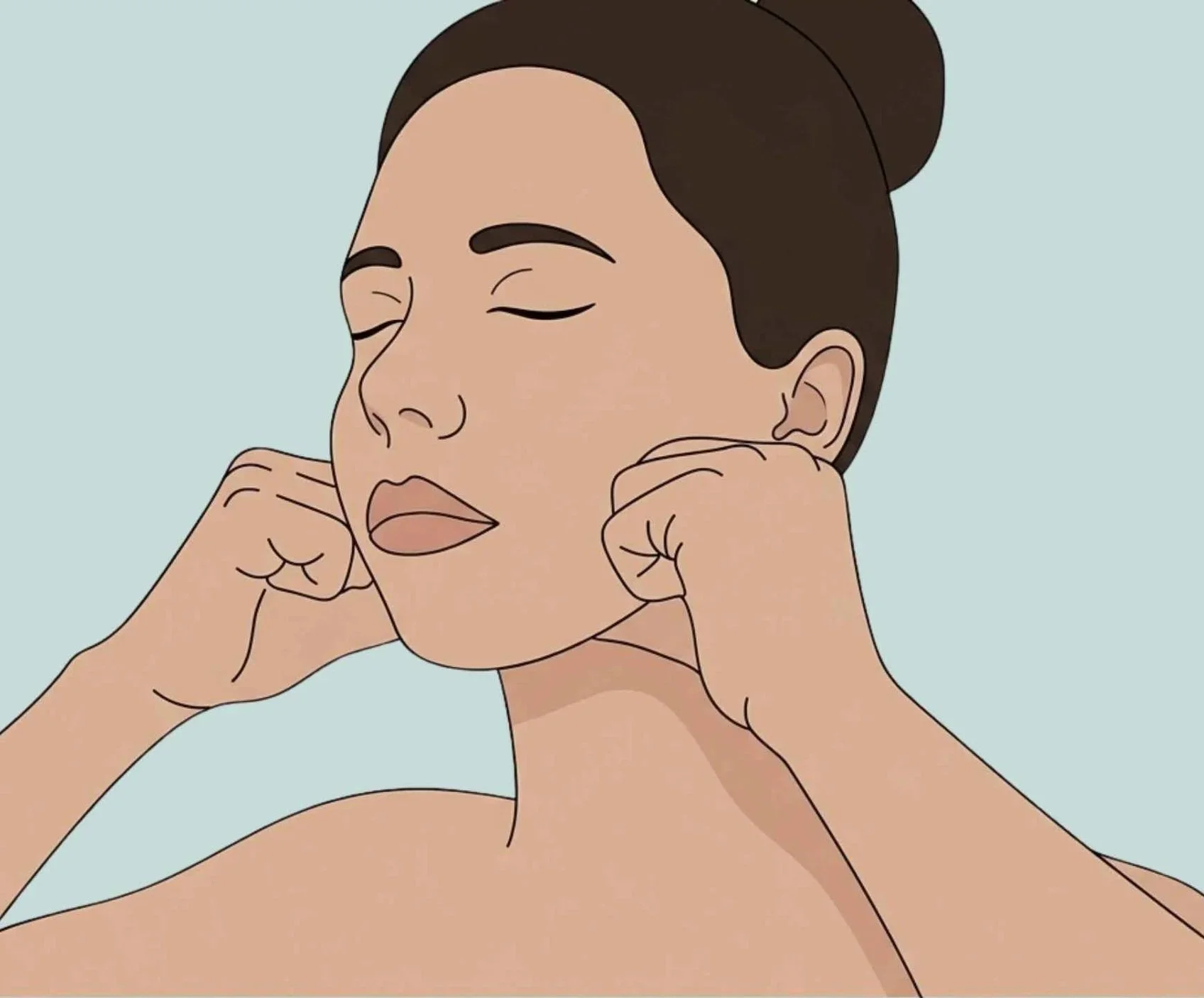
There is an assumption built into most jaw advice that the problem is a habit you could drop if you paid more attention to it. The difficulty is that the habit is running below your attention. By the time you notice your jaw is tight, it has usually been tight for hours.
Muscular tension like this is held rather than chosen. It builds from stress responses that never quite switched off, from hours of concentrating at a screen, from holding an expression, from the simple fact that the jaw is one of the places most of us store what we are not saying. Telling it to relax does not reach it.
What does reach it is sensation. When you can feel the difference between a jaw that is working and a jaw that is resting, you have something to compare, and comparison is how the nervous system learns. The release comes as a result of noticing, not as a result of trying.
That usually means:
Moving the jaw in small ranges, well short of any strain
Including the tongue, the eyes and the neck rather than isolating the jaw
Letting the breath move freely instead of holding it
Noticing what changes, not how much you achieved
Resting often, and stopping well before fatigue
None of this asks you to push through discomfort. If something hurts, it is information, not an obstacle.
“What I love so much about your classes: when the unexpected happens, like a jigsaw puzzle falling into place. Keep surprising me!”
Related Podcasts
If you would rather listen than read, these episodes cover the same ground in Sarah's own words.
Episode 74:
Soothe and Orient Yourself
This is a 30 minute Feldenkrais lesson that includes some very subtle body attention. This is a great class if your eyes or jaw are starting to feel fatigue, if you are feeling burn out or anxiety, if the body needs a reset or a rest, if you are having trouble sleeping or just generally need a restorative practice.
Episode 109:
Relaxed Eyes with Rolling Hands
This class utilizes the powerful effect that calming the hands can have on our whole system, including our eyes and face. This has become one of the most listened to lessons in my library. I have a many students that swear by it. It was recently described to me as “pure magic … it cures my migraines without fail.”
Go deeper with the full courses:

Coming to Your Senses: Feldenkrais for the Eyes, Jaw, Ears and Face
Coming to Your Senses takes everything on this page and builds it into a complete course. Across eight lessons you will explore the space of the eyes, mouth, jaw, ears, and the vocal and breathing apparatus, with most lessons done lying on the back or side. Working in these areas often releases tension elsewhere, including the lower back, hips, shoulders and abdomen.
What students use it for:
Reducing facial tension and jaw clenching
Easing TMJ symptoms
Releasing stress held in the body
Improving breathing function
Reducing eye strain and headaches
Easing tinnitus symptoms
Fewer tension headaches
Better balance
“I find your classes to be exceptionally supportive and illuminating, and I’ve so benefitted from the learning and the unlearning I’ve experienced. Drop by drop, this practice and what I’ve received from your teaching have radically changed how I am in my body and in my life. These online Feldenkrais courses have become some of my favorite practices ever, and I’m excited every time you propose a new series.”
Other Feldenkrais Courses focused on the Face, Jaw, and Nervous System:
Unraveling Body Anxiety
This course will include eight lessons, addressing breathing patterns of stress, tension in the face, eyes, neck, hands, hips and shoulders. The series will also address some of the habitual postural patterns that occur when sitting at a computer for hours.
Soften the System
These lessons aren't just for relaxation or feeling good—they help you better know, experience, and understand your body. Explore exercises focused on breathing, jaw health, and eye softening.
Being Good to Yourself
Explore lessons that promote self-connection, pleasure, finding equanimity in movement, and adapting to change with resilience. This series will focus on the organization of the eyes and the spine to help support the head.
Sensing Subtlety and Satisfaction
Relax your jaw, soften your eyes, and discover self-awareness through touch in this 8-lesson Feldenkrais course. Explore "touch hunger"—the mental and physical impact of long-term touch deprivation.
Yoga + Feldenkrais Blended Classes:
Neck Care
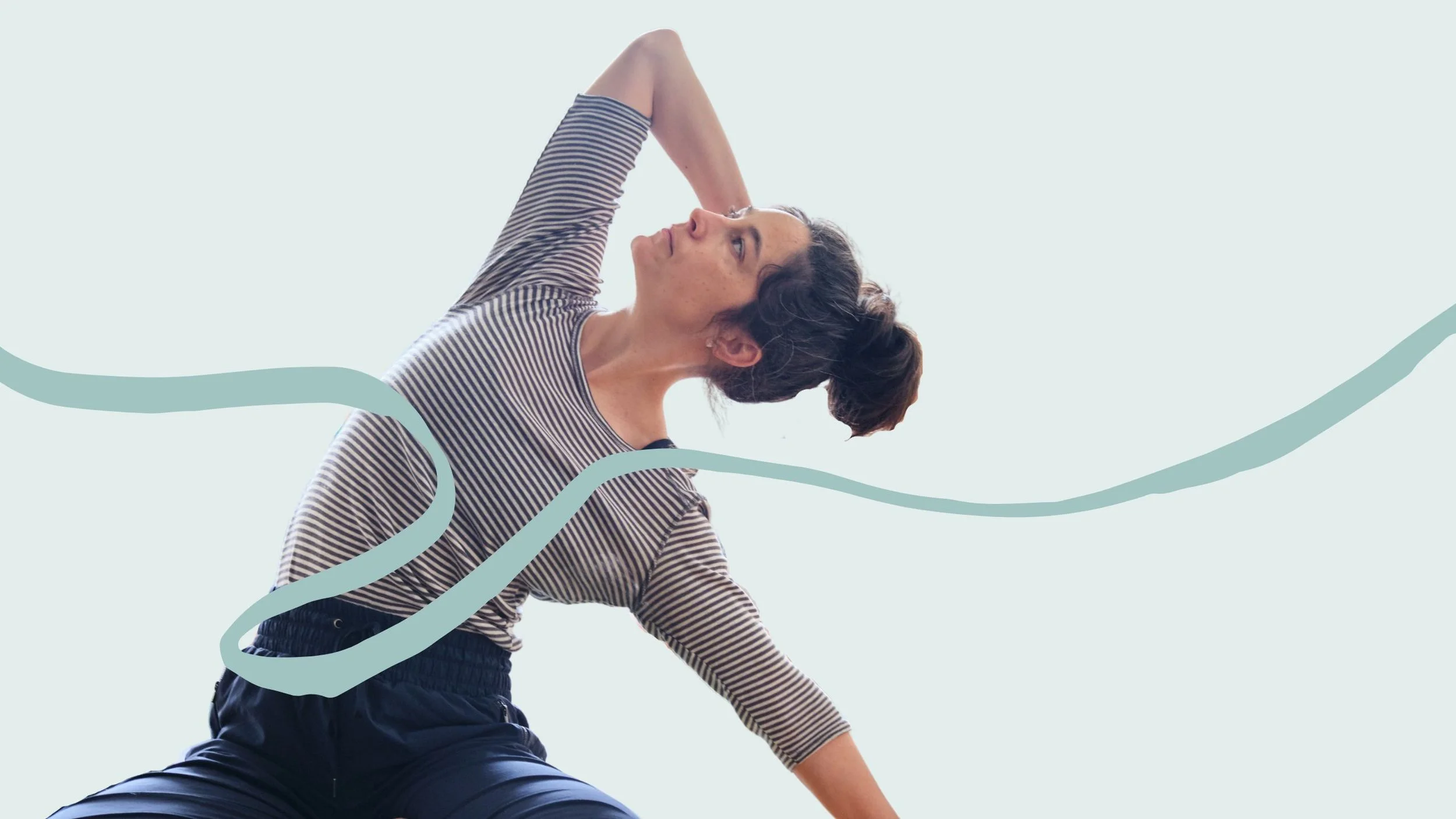
This class is an example of how I blend yoga and Feldenkrais. It takes a committed look at how the neck responds to different poses and actions in the body. There is more of a focus on strengthening the neck than there is stretching it. Exerting in the neck is not a bad thing! You don't need to worry if you feel some exertion in the neck. By strengthening the neck and easing tension up into the jaw, we help keep the head upright, soften jaw tightness, and break out of habitual forward head posture.
Understanding the Difference: Yoga, Feldenkrais, and the Jaw
Yoga and the Feldenkrais Method® both build a deeper connection to your body, but they work differently. Yoga tends to focus on alignment and the external shape of a pose, often demonstrated by the teacher and held while you breathe.
A Feldenkrais® Awareness Through Movement class has no shapes to achieve. The whole class is verbally guided, the movements stay slow and small, and the attention is on the internal experience: coordination, quality and effort. That suits an area like the jaw, where the movements involved are tiny and the point is to feel them rather than to see them.
Sarah's Yoga + Feldenkrais Blended Classes bring the two together, infusing a more traditional asana practice with the curiosity of Awareness Through Movement, including self massage and targeted breathing work.
Why Choose the Blended Class?
If you like having a visual model to follow, or you want the familiarity of yoga without the pressure of perfect poses, the blended format gives you both.
See the difference for yourself:
Where the jaw is and what it does:
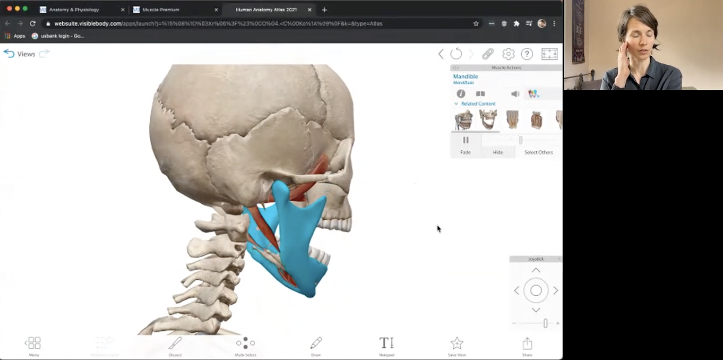
The jaw hangs from the skull at the temporomandibular joints, one on each side, just in front of your ears. You can find them by resting your fingers there and opening your mouth slowly. Because there are two joints working as a pair, the jaw cannot move on one side without the other side responding.
It is one of the busiest joints you have. It works when you chew, speak, swallow, yawn, laugh and hold an expression, which adds up to thousands of movements a day, most of them unnoticed. The muscles that close the jaw are among the strongest in the body for their size, which is useful for chewing and unhelpful when they stay switched on.
The jaw also sits at a crossroads. Its muscles connect up into the temples and the face, back towards the ears, and down into the neck and the floor of the mouth. That is why jaw tension so often arrives together with headaches, eye strain, ear symptoms and a stiff neck, and why working with one of them tends to affect the others.
The jaw, the tongue and the breath
The tongue is easy to forget, because most of us have no idea what it is doing when we are not using it. It has a resting place, it takes part in every swallow, and it is closely tied to how freely you breathe.
When the jaw clamps, the tongue usually presses too, the throat narrows and the breath moves higher into the chest. It also works the other way: soften the tongue and the jaw often follows without being asked. This is why the lessons keep returning to the mouth as a whole rather than the joint on its own, and why a jaw lesson can leave your breathing feeling easier.
Stress, screens, and what the jaw holds on to

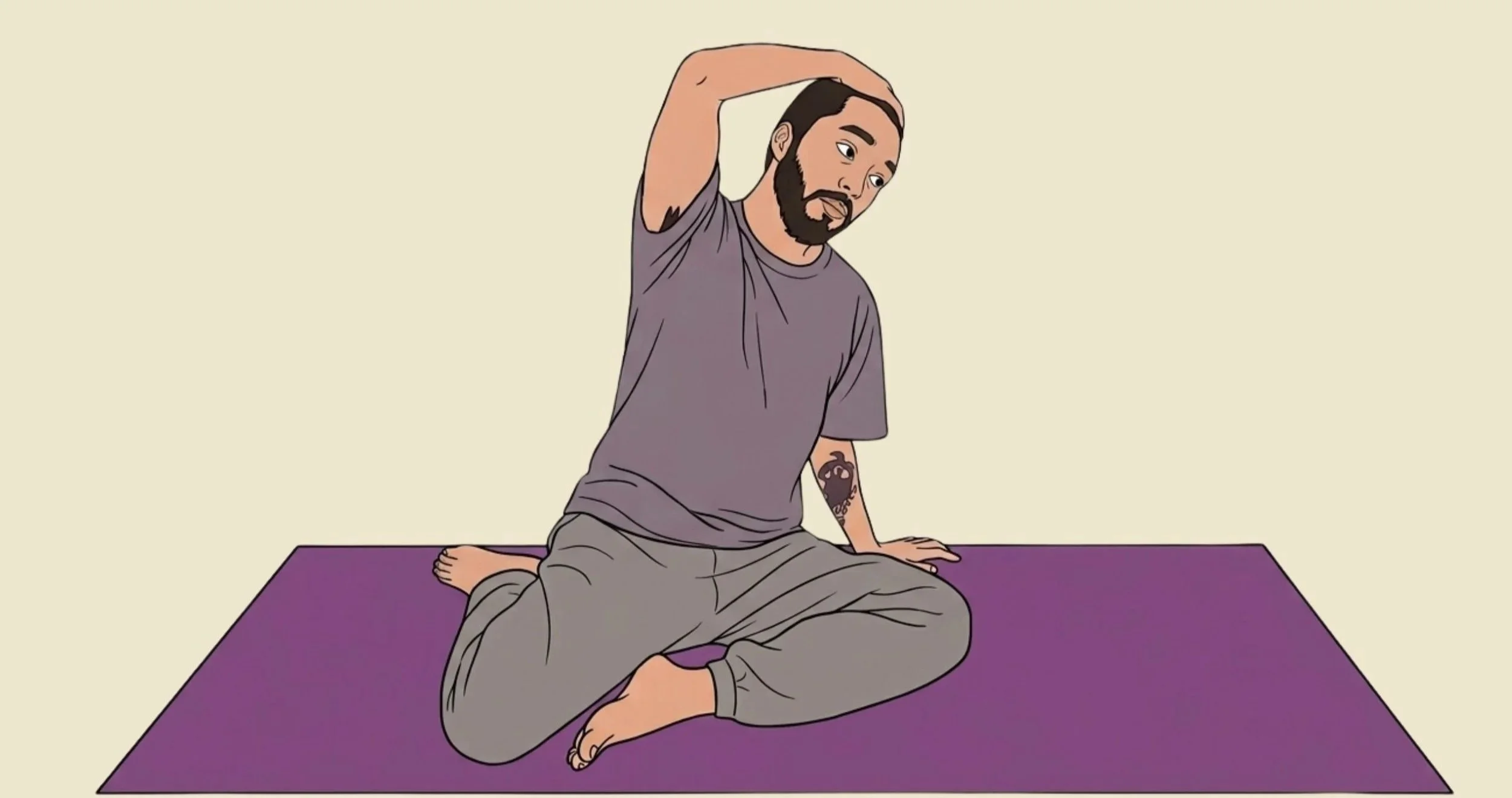
Everyone has habitual ways of holding themselves. Some are easy to spot. The jaw is one of the harder ones, because the movement involved is so small and so constant that it stops registering.
Stress is the usual starting point. Anxiety commonly shows up as a clenched jaw, a tight neck and shoulders, and shallow breathing, and when the stress response stays on after the trigger has passed, that clench settles into a steady state. Many people meet it first thing in the morning, having spent the night grinding or holding.
Modern working life adds to it. Long hours at a screen, looking forward and down, holding an expression through video calls, and the low grade fatigue that comes with all of it, all tend to gather in the face. The habit is not just muscular. Holding the face still is also a way of holding feeling still.
The work here is not to strip the tension out. It is to give your system a genuine alternative, so that ease becomes an option it can find again on its own.
Releasing jaw tension through the rest of you:
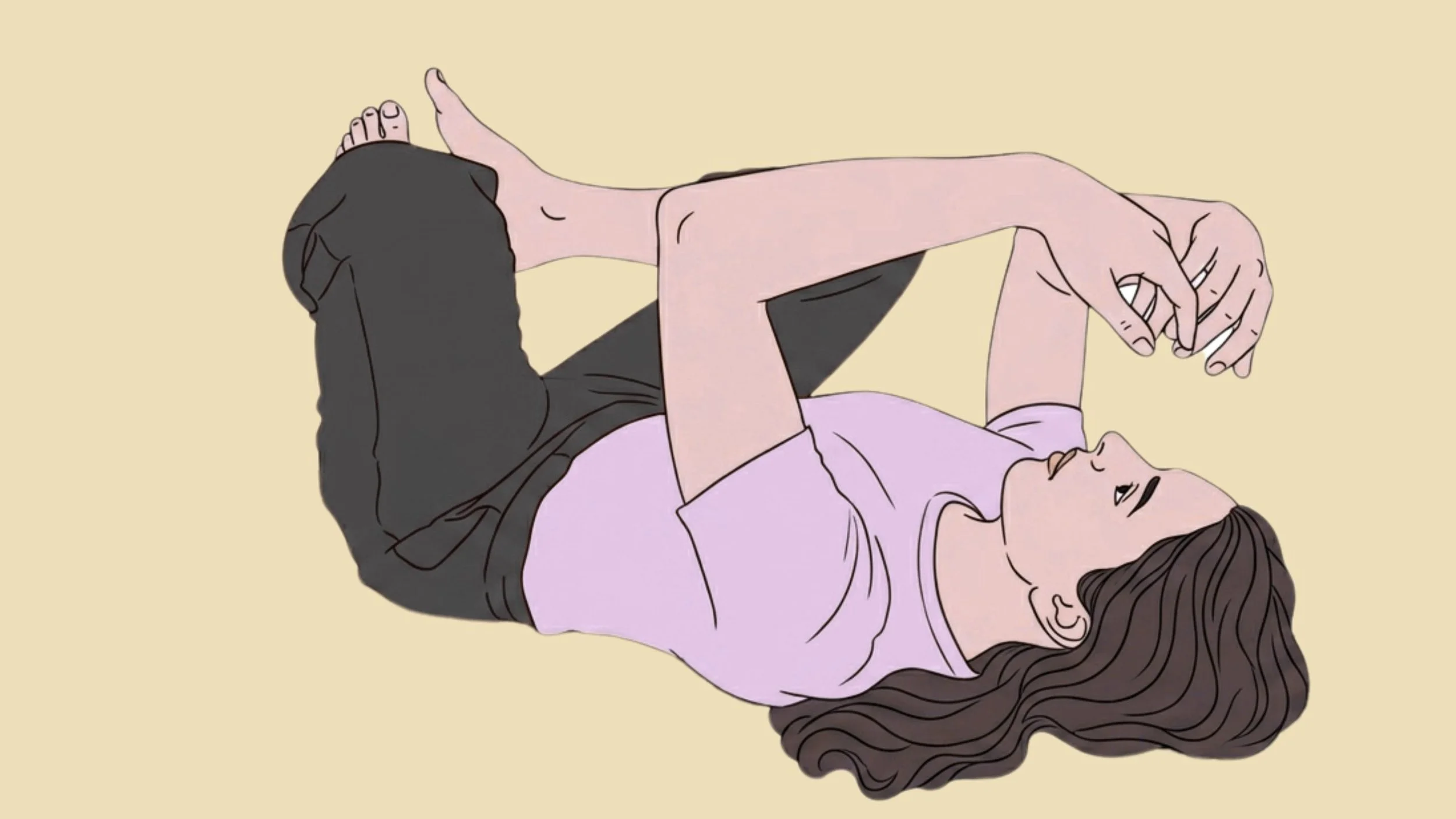
Jaw tension rarely releases by addressing the jaw alone.
The clearest example is the pelvis. One of Sarah's audio lessons begins by finding a soft movement of the pelvis, the jaw and the tongue together, then explores how that quality spreads through the rest of you. People often expect those two areas to have nothing to do with each other, and then feel the connection immediately.
The same is true of the eyes and the neck. Eye lessons calm the nervous system and reduce muscular tension in the eyes, cranium and face. Neck work changes what the jaw has to hold. If stress is the root of the pattern, the nervous system page covers how the lessons work with regulation, and how you carry your head and shoulders is covered on the posture page.
Explore Our Audio Lessons
If you would like to try something before committing to a course, the audio lesson library has complete Awareness Through Movement lessons, not samples, so you get a real feel for what the longer courses are like.

Through novel movements, interspersed with rest, this lessons will help disentangle patterns of bodily tension, focusing on coordinating the jaw and pelvis. Perform the movements slow and small. This is the first lesson of the series Sensing Subtlety and Satisfaction.


Class library membership
The Feldenkrais and Yoga Class Library gives you ongoing access to the whole collection instead of buying courses one at a time. New classes are added weekly, so you can move between jaw and face work, nervous system lessons, posture, walking and anything else as your needs change.
About Sarah: Sarah Baumert is known for her thorough and diverse instruction and her dedication to holding space for individual personal discovery. She facilitates whole body alignment in her students as a way for them to access balance, strength, mobility and physical clarity. Through sensory rich movement experiments, she guides students in cultivating mindfulness and deepening their learning process.
Her experience includes working with people suffering from chronic pain, injury, illness, and other forms of dis-ease. She works with a variety of populations including athletes, seniors, artists, dancers, children, and those recovering from injury, using pain management, and alignment. Sarah is a certified Yoga Therapist, an Authorized Feldenkrais Awareness Through Movement® Teacher and Feldenkrais Functional Integration® Practitioner. Her objective is to acquire the most effective skills for helping her students live with less pain and more pleasure in their bodies.
Testimonials
What people are saying about Sarah's teaching and this course
“I felt as my jaw relaxed, I could feel my pelvis relaxing. I have had a lot of lower back tension and it was so delicious to be moving slow enough so that I could feel it, and understand that it doesn’t have to do all the work.” - Barb
”I am so grateful that you continue to provide these life giving, body strengthening and soul nurturing classes. They are like an inner meditation for every cell in my body!” - Rosie
”After I switched to the ‘regular’ yoga class, I realized I missed how I felt during and after Feldenkrais. I experience an ease of being, a soft wholesomeness, in Feldenkrais. I meditate most mornings, and I sometimes find that same stillness after Feldenkrais. Also, ease of movement: I am always struck at how gracefully I can move a limb compared to how the limb starts out.” -Elizabeth
”I find your classes to be exceptionally supportive and illuminating, and I’ve so benefitted from the learning and the unlearning I’ve experienced. Drop by drop, this practice and what I’ve received from your teaching have radically changed how I am in my body and in my life. These online Feldenkrais courses have become some of my favorite practices ever, and I’m excited every time you propose a new series.” - Betsy
”After these lessons, I often feel like I am “floating”. I continue to realize, in real time and activities like walking, the connection between all parts of my body….the supple power that moves up and down my spine, from my head to my pelvis. - Helen””
This is a non-judgemental, non-corrective way to experience your body in motion. Nothing is forced, nothing is stretched, and noticing what feels good is part of the point. Lessons suit all levels and most are done lying on the back or side.
If any of this sounds familiar, whether you wake up with a sore jaw, catch yourself clenching at your desk, or have been told to relax a face that will not listen, it might be time for a different approach. Take twenty minutes, lie down, and start by noticing what your jaw is already doing.
Frequently Asked Questions
-
Yes. Jaw tension is usually a habit of muscular holding that runs below conscious attention, which is why deciding to relax rarely works. Feldenkrais lessons use small, gentle movements and guided attention to make that holding noticeable, so your nervous system has something to compare and a genuine alternative to find. It is movement education rather than medical treatment.
-
Many students come to this work for TMJ symptoms and find the lessons ease the muscular tension around the joint, along with related headaches, eye strain and neck stiffness. The lessons are gentle and stay well within comfort, so they can usually sit alongside dental or medical care. They are not a diagnosis or a treatment, so if you have a diagnosed TMJ disorder or ongoing jaw pain, speak to your dentist or doctor as well.
-
They are slow, verbally guided movements, most of them done lying on the back or side with the head supported. The movements are small and never go near the end of your range, so there is no stretching the joint or forcing the mouth open. Lessons usually include the tongue, eyes, neck, spine, and pelvis, as well as the jaw itself.
-
Nobody can direct their jaw while asleep, so the work happens during the day. As you become more able to feel when you are clenching and more able to let it go, that pattern often carries into the rest of the day and the night. Grinding can also have dental causes, so it is worth raising with your dentist too.
-
Because the jaw does not work in isolation. The tongue takes part in every swallow and is tied to how freely you breathe, the eyes influence tone through the face and cranium, and the neck carries whatever the jaw is holding. Working with the whole area reaches the jaw more effectively than working on the joint alone.
-
Two to three sessions a week is a good place to start, and even 10 to 20 minutes a day builds consistency. Because the method is gentle, you can practice often without straining. The quality of your attention matters more than the time you spend.
-
No experience is needed. Most lessons need only a firm surface to lie on and something to support your head. Some are done sitting, which needs a stable chair with a flat seat.